

Canada Is Turning Plastic Waste Into Vinegar - Here's How
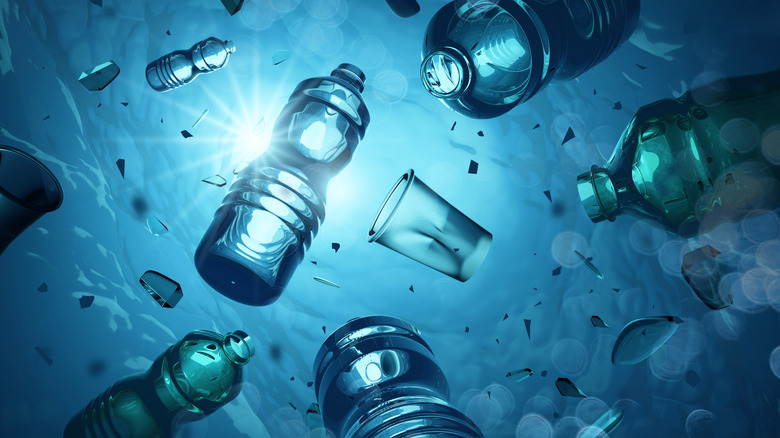
The world has a plastic problem. We produce hundreds of millions of tons of plastic waste each and every year, but only a fraction of it is recycled. According to the OECD, plastic waste, which takes a shocking amount of time to decompose if left untouched, reached an estimated 400 million tons in 2024. But only around 9% of it is ever recycled, including in this clever way in Hawaii, with most of it ending up in landfills and being incinerated, or simply escaping into the environment.
Now, in what looks like a promising breakthrough when it comes to dealing with the growing amount of plastic waste, researchers at the University of Waterloo in Canada have demonstrated a way to turn plastic into acetic acid, which happens to be the main ingredient in vinegar. The method uses sunlight to activate a specially developed iron-based catalyst, triggering a series of chemical reactions that break down the plastic and convert it into the acidic compound.
For their work, the researchers took some inspiration from nature, where certain fungi use enzymes to break down tough organic materials such as those found in wood. They attempted to replicate this biological process using an artificial system, developing a catalyst made from individual iron atoms embedded in a material called carbon nitride. The approach essentially gives discarded plastic a new purpose, producing acetic acid instead of leaving it as waste. The researchers have demonstrated the process on several common plastics, including PET, PVC, polyethylene, and polypropylene.
No, we can't splash it on our fries
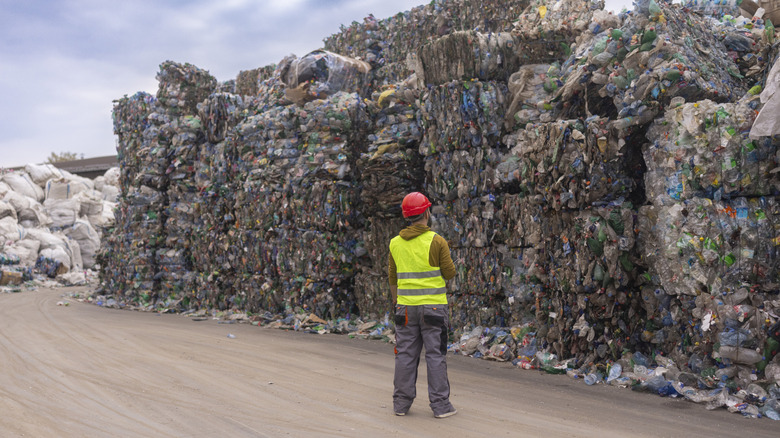
It could be some time before we're splashing acetic acid from plastic waste over our French fries. For that to happen, it would need to be properly purified and tested for harmful contaminants, and then of course be checked to ensure that it meets food-safety standards. The researchers are, in fact, more focused on using their technology to break down plastic waste and tackle pollution, especially microplastics in water.
Team member Dr. Yimin Wu said that as the process uses sunlight, plastics are able to be broken down without adding any extra carbon dioxide to the atmosphere. It would, therefore, be a cleaner alternative to sending plastic to landfill or burning it. It's worth noting, however, that this doesn't mean we can simply pour the catalyst into polluted rivers and oceans and let it get to work breaking down plastic. A practical system would more likely involve collecting and preparing plastic waste, and then treating it in a specially designed reactor containing water and the necessary chemical ingredients. The resulting acetic acid would then need to be separated and purified for possible use in industrial manufacturing and chemical production.
For now, though, the technology remains at the laboratory stage. Whether it can be scaled up economically and environmentally remains to be seen, but the prospect of turning plastic garbage into something valuable is certainly a fascinating prospect.