

Beats 360 Headphones Review: Light, Colorful, And Loud
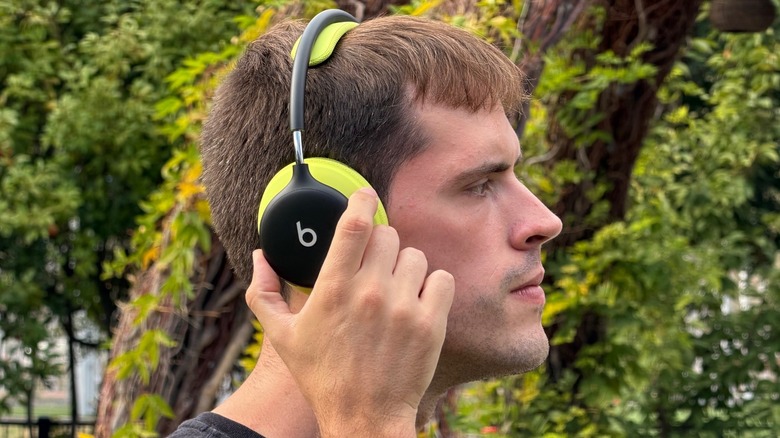
Three years since the arrival of the Beats Studio Pro, Beats is back with the Beats 360 headphones. Heavily teased during the World Cup by soccer players and celebrities, these headphones by Apple's subsidiary are finally official, coming in at $349 and launching on September 22. Over the past few weeks, we've been testing these headphones, and they're currently the best that Beats has to offer.
At a glance, the Beats 360 bear a slight resemblance to the AirPods Max, but they feature several unique features that set them apart from Apple's premium over-ear headphones — including a proprietary chip. These headphones have replaceable ear cushions and headband mesh for an extra colorful flair, they only work wirelessly — as the construction is super thin and light with no support for audio passthrough via USB-C cable — and, best of all, they comply with EU's upcoming regulations which require headphones to have user-replaceable batteries.
While the Beats Studio Pro headphones were above average, they didn't exactly set the world on fire. Now that Beats has had a few years to build a worthy successor, we wanted to find out if this storied brand could make a splash in 2026.
Design and comfort
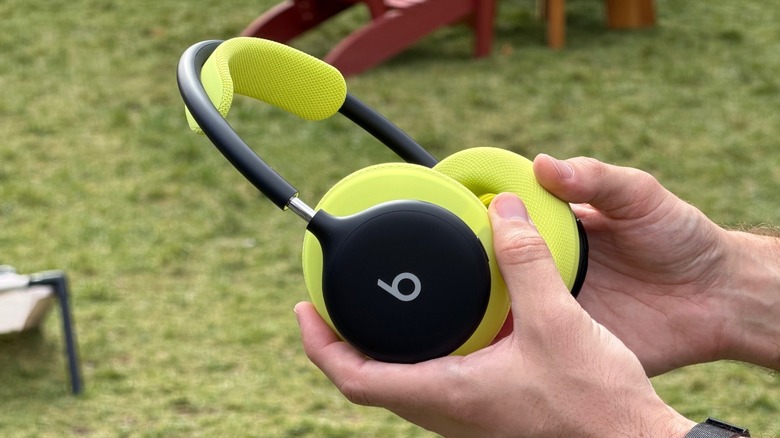
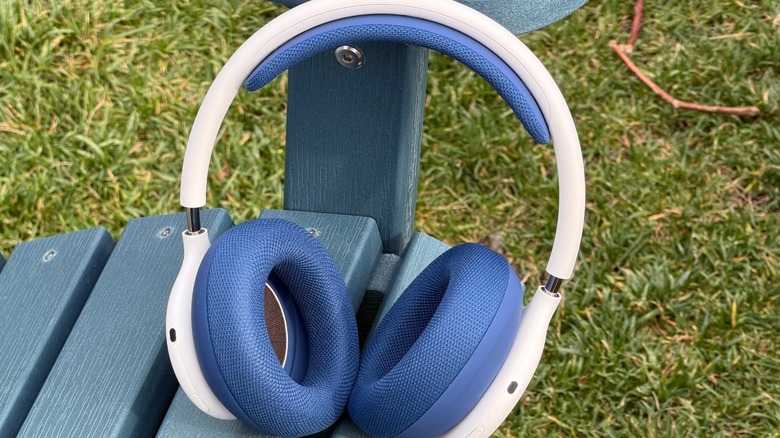
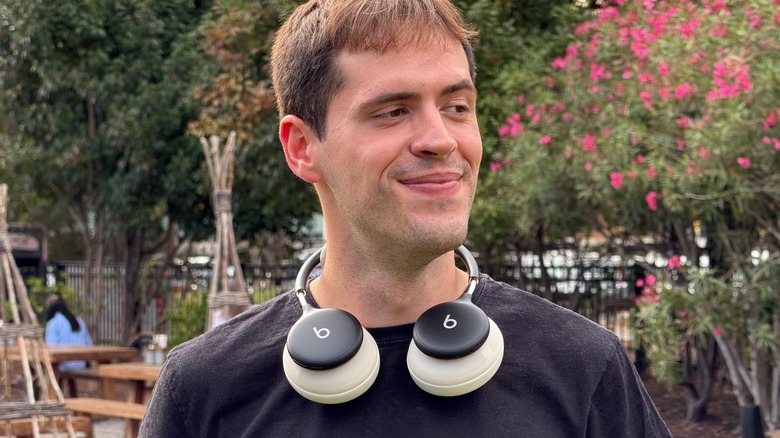
Available in Black, Cloud, Pink, and Sky colorways, the Beats 360 headphones evoke the AirPods Max for the simple fact that they feature aluminum stems with mesh earcups, which the company calls Performance Knit. Users are able to remove the ear cups to add new colors, and Beats will offer eight different cushion options out of the gate. Combined with all of the frame colors, it's possible to mix and match up to 256 combinations.
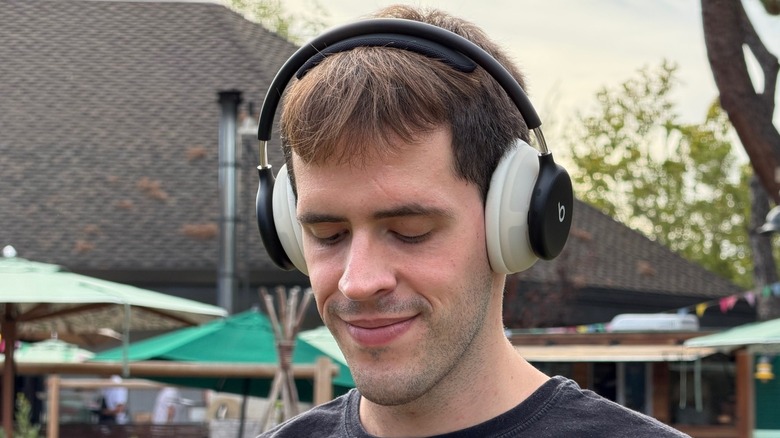
Made with a true wireless architecture — meaning each earcup contains its own battery, antenna, and processor — these headphones weigh 294.5g (~0.65 lbs), and the cushions make the headphones much lighter than the Beats Studio Pro. While Beats warned us that these headphones could have a tighter grip on the heads, since they are designed to be worn while exercising, I've found these headphones comfortable to wear.
While an 11-hour long flight was enough to mold them to my head shape, the past few weeks using these headphones have been a pleasant surprise. The headband doesn't heat my head up and the grip is perfect. One thing I need to disclaim, however, is that it took me the longest time to get used to the way the buttons have been positioned on the back of each ear cup. I also struggled to locate the little "L" and "R" markings to denote which side is which. The lack of identifiers and different textures made the learning curve a bit steeper than expected.
Color options and durability
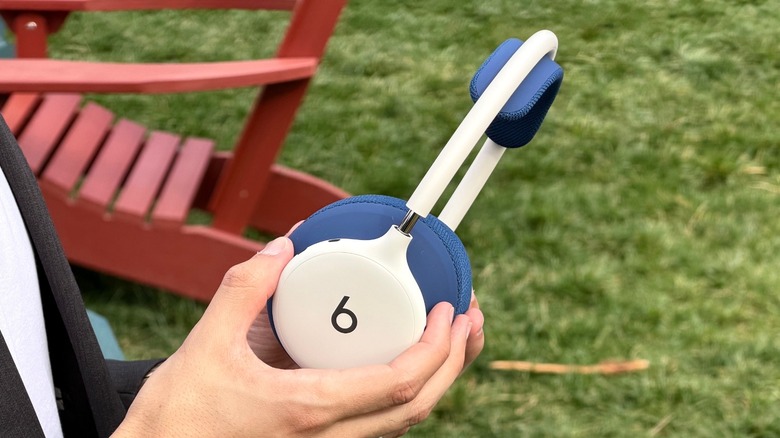
Before we get into sound quality, it's worth highlighting the customization options. Beats currently offers four frames, eight cushions, and eight headband colors, with up to 256 combinations in total. To remove and replace the ear cushions, users just need to twist them, and they'll pop out. Putting them back in is pretty straightforward as well. For the headband, you just need to push down. For the purpose of this review, Beats gave us the Volt (made of diamond-knit textile with 36 micro-threads for a breathable experience) and UltraPlush Cloud ear cushions, which featured the same engineered leather found on the Beats Studio Pro.
While one is made for outdoor use and the other for a more comfortable music experience at home, Beats tells BGR that these cushions are capable of delivering the same sound, which we found to be accurate. Ultimately, it's all about which material users prefer.
Still, I do have concerns over the durability of the Performance Knit ear cushions. Featuring the same fabric as AirPods Max, Beats touts that these headphones can be worn at the gym and while running, but if you use moisturizer, sunscreen, or just sweat a lot, the ear cushions will get dirty quickly (just look at these examples of the AirPods Max). While Beats 360 Cushion Kits are available at a special introductory price of $9.99, they will eventually cost $49.99, which is quite a high price to pay if you're sweating through the cushions fairly frequently.
Sound quality
Since the release of Beats Studio Pro, which were the first headphones from Apple with lossless audio support, Beats has been revamping its sound signature. That deep bass and crazy treble are no longer present, and Beats 360 has the best sound in any pair of Beats headphones I've ever used.
In my experience, the sound is consistent, voices are crisp and clear, and it's always easy to identify instruments and little details in a song. Honestly, I couldn't tell much difference between these and the AirPods Max. Beats says it developed a proprietary chip for the Beats 360 (instead of using Apple's H2 audio processor), which delivers powerful bass, wide dynamic range, precise detail, and low distortion across the entire frequency spectrum.
With a high-fidelity acoustic architecture, it uses dual neodymium ring magnets with 12dB higher output than the Beats Studio Pro driver, and its diaphragm uses a triple-layer construction to move efficiently while controlling unwanted resonance for a more precise sound. Another improvement comes in an advanced venting that optimizes airflow through the acoustic system.
Beats also says it made active noise cancellation 1.75x more powerful than on Studio Pro, which means that you can barely hear a thing when ANC is on, even when watching a TV show on a plane. With a 9-microphone configuration, and 8 completely dedicated to ANC, the company also improved the ANC algorithms. The Transparency mode, in my experience, also sounds natural and effectively lets me stay aware of my surroundings. The microphones on these headphones are also great and, so far, phone calls have been made without a hitch indoors and outside.
Beats' custom chip and other notes
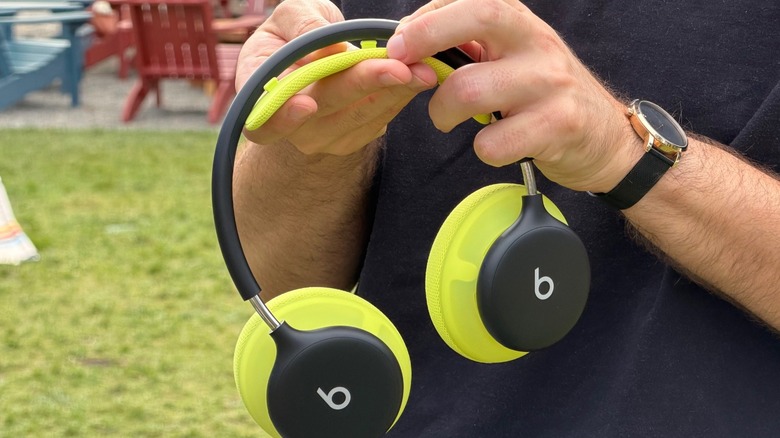
After a few iterations of Apple's audio chips, Beats surprised us by developing yet another unnamed proprietary audio chip. While the company says this provides better interoperability across iOS and Android, that wasn't an issue for the Powerbeats Pro 2 or Powerbeats Fit. Without Apple's H1 or H2 chips, some features are unavailable, such as Live Translation or Conversation Awareness — not that Beats necessarily adds them to its products anyway. Still, the lack of Apple's audio chip brings other little inconveniences, like the Beats 360 connected animation popping up every time I connect them to my iPhone, forcing me to press "X" to continue using the phone.
That said, Beats still offers one-touch pairing, iCloud pairing, automatic switching, audio sharing, hands-free Siri, Find My support, and personalized spatial audio, while also giving Android users the same features. There's also the Beats app for Android, which allows users to see the battery status, force firmware updates, and more.
Additionally, I want to highlight just how needlessly tricky it can be to power off these headphones — even though it should be as simple as just long pressing the power button for a few seconds — and how they never turn off on their own if they aren't being used. They also lack auto-play/pause when removing them, which, for me, is a huge miss on a pair of headphones in this price range.
Battery life
Beats promises up to 32 hours of battery life with ANC on, which is an improvement over the Studio Pro's 24 hours. However, compared to other premium headphones, Beats underperformed. Marshall's Milton A.N.C. headphones, which BGR recently reviewed, offer over 80 hours of battery life. Several other headphones in this price range also last more 50 hours.
With that in mind, the Beats 360 might have a great battery compared to AirPods and other Beats devices, but in a competitive market, this isn't an area where you want to lag behind. With moderate use, I had to charge them twice in about a week, which not only shows that I've been really digging them, but that forgetting to charge regularly could leave you with a dead battery at an inopportune time. With other recent headphone review units, I felt like I rarely had to charge them, while these Beats headphones needed to be plugged in a few times.
Beats does say that a 5-minute charge provides up to 1 hour of playback. Since these headphones don't offer audio passthrough, the 32-hour lifespan is a bit underwhelming. At least the company is now offering replaceable batteries, which means that once the capacity begins to shrink over the years, owners will be able to replace the battery rather than buying all new headphones.
Price and conclusions
The Beats 360 costs $349.99 and are available now. The extra ear cushions currently cost $9.99, which is a great deal for anyone looking to dive into customization. But, as noted above, the price will soon jump to $49.99, which is far less compelling. The company has also teased collaborations and special editions of the Beats 360 to come.
For those looking for high-end and easy-going headphones, I can't recommend these headphones enough. They're stylish, they sound amazing, and even though they lack auto play/pause and Apple's H2 chip, they're great headphones at a good price. They come relatively close to matching AirPods Max at a far lower price point, and the customization options are the cherry on top.
That said, I do think the ceiling for Beats could be higher. I still don't understand why the company keeps going back to its proprietary chips, making compromises like not offering audio passthrough or completely skipping lossless capabilities. While it's true that these headphones sound great, it's also weird how they work more like wireless earbuds but with a traditional over-ear design. Beats still seems to be working on reestablishing its identity.