

Connecticut Is Rolling Out AI-Powered School Bus Cameras
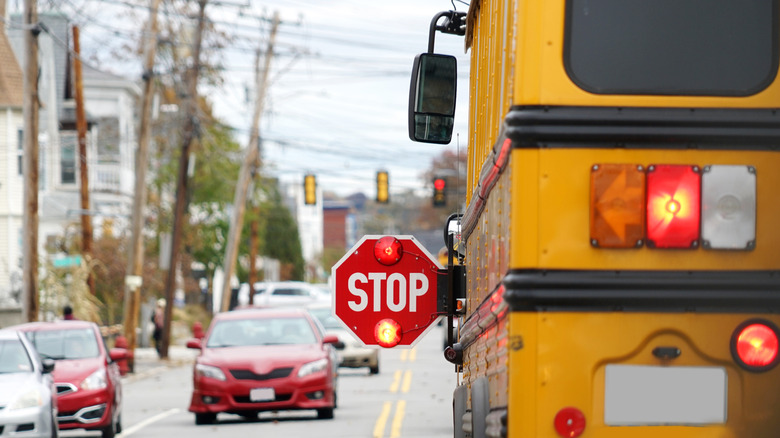
The town of Vernon, Connecticut, is taking student safety more seriously this year. The local government is partnering with BusPatrol, a company specializing in school bus stop-arm enforcement solutions, to implement AI-powered cameras that will accurately detect when other vehicles wrongfully pass a stopped school bus. The cameras will record video evidence that local police officers can review. If an officer deems that a violation occurred, a citation will be sent to the offending vehicle owner. The fine for a first-time offense of illegally passing a stopped school bus is $250.
This technology is nothing new. In fact, AI traffic cameras are watching your every move already. This type of surveillance can be problematic; Virginia's AI traffic cameras are frustrating local residents with wrongfully generated tickets. However, the school bus cameras in Vernon might actually be on track to provide a net benefit for the community.
One study conducted in the city of Bridgeport, Connecticut, showed that nearly 10,000 instances of vehicles illegally passing a stopped school bus occurred in the locality over the course of just six months. The Town of Vernon asserts that 90% of first-time violators do not commit a second offense if they are penalized. If that statistic holds up, then the town's children will be much safer going to and from school this year.
UPDATE | 9/10: BusPatrol sent the following statement regarding the story: "BusPatrol's technology is designed, installed, and managed with a narrow, legally defined purpose: enforcing school-bus stop-arm laws and helping protect children. The system activates only when a school bus is stopped with its warning lights and stop arm engaged for children boarding or exiting, and only to capture and identify evidence of a motorist who may have illegally passed the bus. It does not continuously scan license plates, track vehicle movements, conduct mass surveillance, or scan traffic while the bus is traveling along its route. Stop-arm camera programs operate within a highly regulated framework established by applicable state and local law, including requirements governing the technology's purpose, authorized access, data use, retention, deletion, and the local law enforcement final approval of potential violations."
AI cameras are taking over public transport
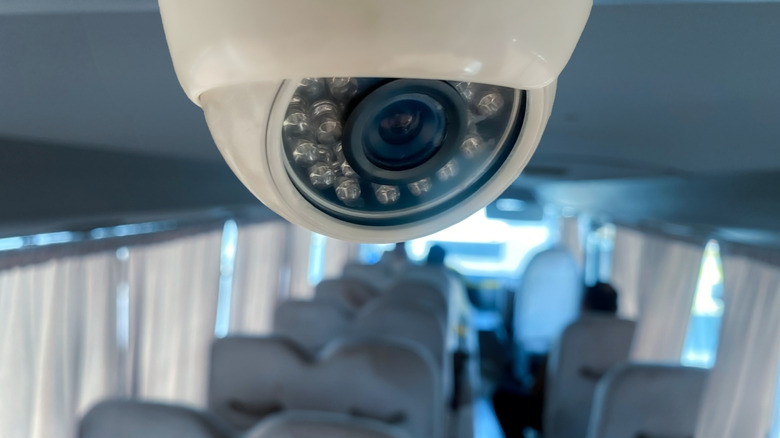
AI-powered traffic cameras are one thing, but the situation in Connecticut is indicative of a growing trend of AI cameras being mounted on all kinds of public transport. School bus cameras might be used for traffic surveillance all over the country, and not just for the sake of child safety. BusPatrol, the company that's partnering with the Town of Vernon, is already present in 24 states and has cameras mounted on more than 40,000 buses. It's well-established that BusPatrol sends video to law enforcement partners. And considering that police are already using Flock cameras for more than just tracking license plates, there's no telling how the footage from BusPatrol cameras might be utilized without the public's knowledge.
It's not just school buses, either. As one prominent example, the Southeastern Pennsylvania Transportation Authority (SEPTA) uses AI-powered cameras on regular Philadelphia city buses and light rail trolleys. One stated reason behind the use of these cameras is to detect illegally parked cars that might disrupt public transit. While there's certainly something to be said for using technology to improve safety and transportation reliability, it may take greater change before people accept the large amount of surveillance on public transport.