

3 Disadvantages Of Bone Conduction Headphones

Bone conduction headphones are a popular choice for some, mainly because they don't plug your ears. You can hear what's going on around you, which is especially useful for runners or those who commute or walk in busy urban areas. And they are typically comfortable, sitting in front of your ears with hooks that wrap around the ear or some around the back of your head or neck. They work by sending vibrations through your cheekbones, which your brain processes as sound.
I have worn and reviewed countless pairs of the best bone conduction headphones, in-ear buds, headphones, as well as clip-on style open-ear buds to compare. So, I have a good idea of how they work, fit, sound quality, and advantages and disadvantages. At the top of the list of advantages alongside being able to remain aware of your surroundings is that they are suitable for those who find in-ears uncomfortable or can't find the right eartip fit for their ears. That said, there are disadvantages, too, that you should consider before choosing this type of headphone.
No noise reduction

Because bone conduction headphones sit by your ears and don't cover them, you don't get any kind of noise reduction. While the benefit is that you can hear a car coming by, a cyclist's bell, other pedestrians, or a dog barking, you'll also hear everything else. That means the neighbor mowing the lawn, the constant zooming of cars, even the rustling of trees or other people milling about on a trail.
If you're looking for a pair of headphones that can shut out distracting ambient noise, like the sound of your furnace or the hum of the dishwasher while you work or take a Zoom call at home, or the engine noise of the train while traveling, you'd be better off with cheap noise cancelling headphones. There are some exceptions, like the Shokz OpenFit Pros, which claim to offer some noise reduction. But those are technically air conduction headphones, not bone conduction. They similarly leave your ears unplugged, but the buds sit atop your ears versus on your cheekbones. They feature the brand's proprietary noise reduction technology that, in my tests, works surprisingly well given the open-ear design. But for traditional bone conduction headphones, active noise cancelling isn't possible due to the design. That said, some models have noise cancelling microphones, which can help filter out some background noise when you're on phone calls so the other person can hear you more clearly.
Audio quality isn't as good

Bone conduction headphones are meant for convenience, not sound quality. As they don't use your eardrum, the transmission of sound won't be entirely accurate and true to the source. You'll find some that sound better than others, but they will not rival headphones or in-ear buds. Bass will be less intense and you won't enjoy an immersive listening experience, but you should get clear mids and highs, perfect for podcasts and calming background music. Based on how and why you might want to use them, this is a trade-off that's worth it for some. I have a friend who's an avid runner and swears by bone conduction headphones because they stay put and he can listen to podcasts while staying aware of his surroundings. The model he prefers is the Shokz OpenRun Pro, which even we liked for comfort and battery life in our review, even though he admitted that audio quality won't blow you away.
Thus, sound quality is not the primary reason to get them. They're meant for specific use cases, primarily runners and fitness enthusiasts, and office workers who want something comfortable to wear all day without having to flip a switch or physically remove them to speak to someone. It's also worth noting that they are a viable option for those with hearing aids or hearing loss as well, particularly those with middle ear disorders.
Vibration sensations can be jarring for some
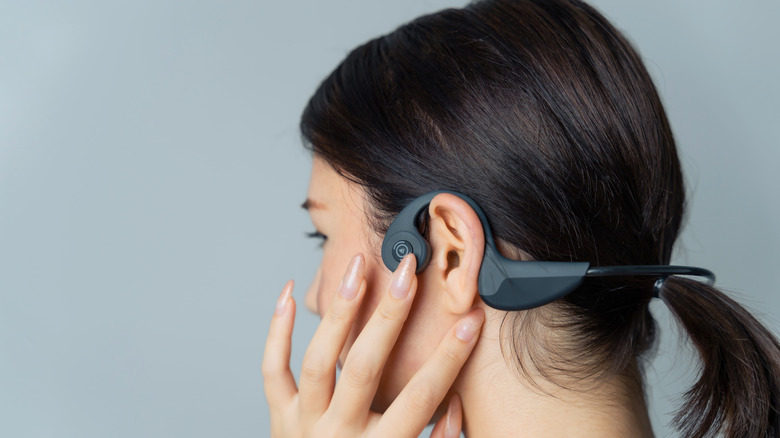
If you have ever worn bone conduction headphones, you'll know that there's a sensation with them that some may find uncomfortable. It's a vibration you feel on the side of your head that can be jarring at first. Some users get used to it after a while, others may not like it, and some may find that it makes longer listening sessions uncomfortable.
Your best bet given this is to try on a pair first before buying if you have this option. Don't let the sensation turn you away immediately, though, as it takes some time to get used to it. But overall, they feel different from traditional in-ear buds since they rely on vibrations transmitting through your cheekbones to your inner ear, bypassing the eardrum altogether. So, while bone conduction headphones are not for everyone, they are great for specific scenarios, like running, cycling, and other outdoor activities, commuting if you want to maintain full awareness, and office calls in already quiet environments. The trade-off for keeping your ears wide open and enjoying a comfortable and secure fit around your head may be worth it for some in place of better sound quality and noise cancellation. It all depends on how, why, and where you want to use them.