

5 Major Tech Brands You Might Not Realize Are Owned By Japanese Companies
Japan's role in global trade cannot be understated. Names like Honda, Mitsubishi, and Subaru brought better competition among western automakers while Toyota managed to mainstream hybrid vehicles with its Prius line. And we can't forget about a 19th-century playing card manufacturer named Nintendo that literally switched it up in the decades since, charming us with bright and fanciful characters like Mario, Link, Kirby, and others across video games, comics, and movies.
Add in a dash of anthropomorphic robotics, one of the most ambitious early developments of high-definition video and television, and even the smaller things in life like QR codes and sushi served on conveyor belts, and you're left with technology that pushes the state of the art with a little bit of whimsy to boot.
Of course, for every Fujitsu, Yamaha, and Nikon out there, there are many other Japanese companies that don't exactly wear their identities on their sleeves. We'll tell you about (or remind you of) a few of them right here.
1. Sony
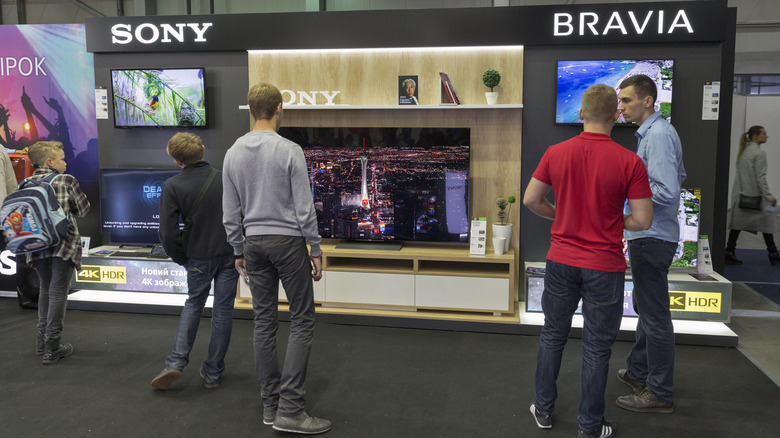
You might know Sony nowadays as the producer of those blockbuster Spider-Man movies or your nightly fix of Jeopardy! — long may the late Alex Trebek reign. Maybe you have an ax to grind with the PlayStation team after they announced the company would ditch physical game media. But some of us are old enough to remember the trade wars of the '80s, when it felt like Japanese car and appliance exports were effectively shutting down American manufacturing. The biggest name stealing the show? Sony.
Yep, this isn't just some vague West Coast-based multinational butting heads with Disney and Microsoft. The company, first known as Tokyo Telecommunications Engineering Corporation, found its earliest success in the U.S. and Europe exporting its own transistor radios starting in 1957, and followed through with a variety of portable and home audio gear before incorporating televisions and cameras into its manufacturing portfolio.
In 1968, it leapt into the American record industry through a joint venture with CBS and landed on the New York Stock Exchange as its first Japanese firm only two years later. With so much time having passed, it's a little easier to see how Sony has blended itself into our everyday lives.
2. Panasonic
Konosuke Matsushita made his bones crafting two-way electrical sockets that he, his brother, and sister sold out of the ground floor of their Osaka residence in 1918. In less than a decade's time, Matsushita Electric Housewares became a household name, fittingly badged as National.
By 1955, the company was exporting speakers under a new name: Panasonic. Since then, the company's ambitions have outgrown both labels with beard trimmers, hair dryers, microwaves, washing machines, and electric kettles among many other appliances added into the mix.
In April 2026, Panasonic began contracting the manufacture of its TV and home entertainment products to Chinese producer Skyworth. The company's consumer business underwent reorganization as well, though no immediate changes have been made to its other product lines. Good news, then, if you're looking to pick up a Lumix mirrorless camera for that shutterbug itch, especially if you plan on travel vlogging real soon.
3. Epson
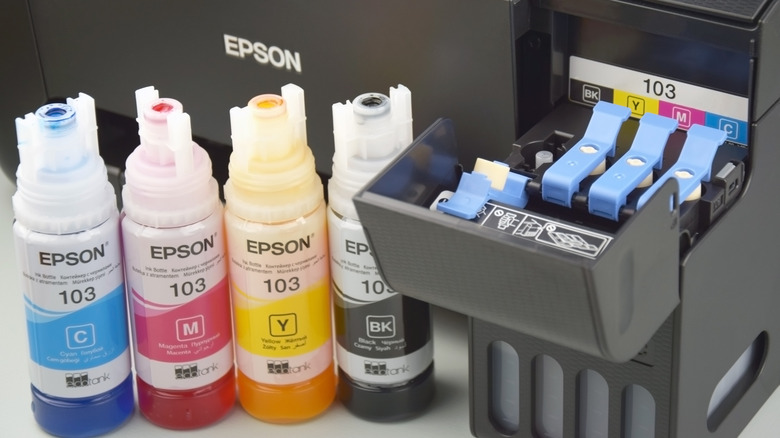
For such an innocuous name, Epson actually does stand for something: "son of Electric Printer." Even more remarkable is the fact that the Nagano-based business began as quartz timepiece manufacturer Seiko in 1942. In pursuit of new markets, the company launched a timing printer in 1963, linking inputs such as a starter's pistol and finish line photo equipment to a clock and a printer on the same circuit to deliver instant, precise athletic results. Seiko followed up with a miniature digital printer, the EP-101, in 1968. With a second generation of printers, the company established Epson as its own brand in 1975.
Epson has been on many similarly curious adventures in its history, producing a portable 2-inch LCD TV in 1984, a self-propelled robotic mouse named Monsieur in 1993, and the world's first digital rangefinder camera in 2004 — which became an acclaimed product in retrospect.
Still, if you're an office worker, you probably only know the name from those 3 p.m. coffee breaks with your eyes slightly glazed staring at the digital projector or printer-copier, maybe wondering how much your boss pays for ink.
4. Canon
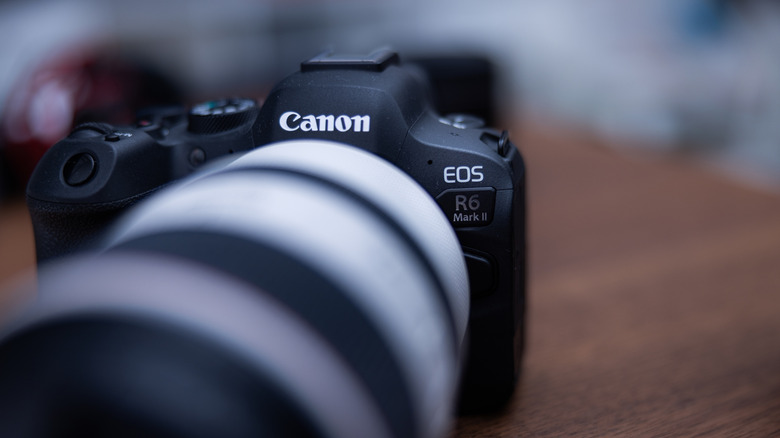
Canon might be an authoritative-sounding English word, but here, we're talking about an imaging company with origins in the Roppongi neighborhood of Tokyo. Unlike other firms on this list, Precision Optical Instruments Laboratory has more or less stuck to cameras as its main focus since its founding in 1933.
Funnily enough, its first production model, the Hansa Canon of 1935, actually used lenses from Nikon — itself formed from the merger of three optics manufacturers and quickly whisked into the Japanese military effort during World War I. The Canon, modeled after rangefinders from Germany's own Leica, was the first popular 35mm camera made in Japan for Japanese consumers.
Eager to expand and take a piece of Kodak and Polaroid's pie, Canon landed an office on Fifth Avenue in New York in 1955, and has basically usurped its American competitors in the years since. The company's been slower than some of its modern rivals in transitioning from single-lens reflex cameras to mirrorless models, but its EOS R series maintains decent reviews. Sadly, when it comes to all-in-one inkjet printers, this is not the case for Canon.
5. JVC
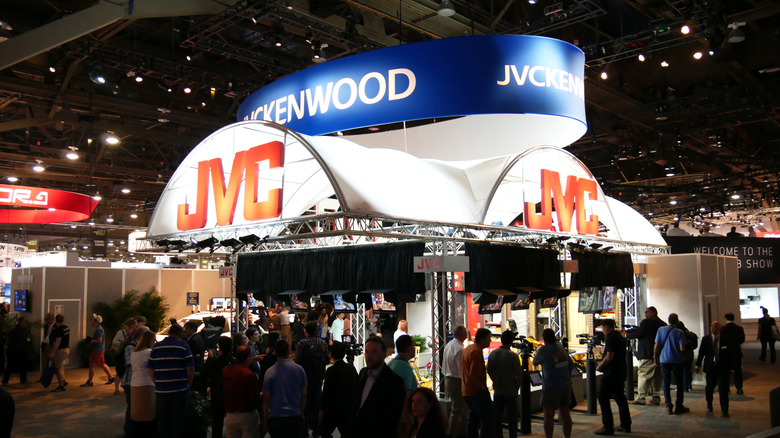
The story of JVC shows that what went around, came around. The Victor Corporation of Japan was founded in 1927 as an offshoot of the Victor Talking Machine Company — itself launched in Camden, New Jersey, during the late-1880s, according to researcher Paul Edie. You might know of Victrola phonographs as the first ones to play flat disc records, which were easier to produce than Thomas Edison's own wax cylinders.
In any case, JVC pioneered domestic phonograph production until World War II took hold. RCA, Victor's owner in 1937, sold off its shares in JVC. The company rode the wartime economic surge before slumping through peacetime and was eventually acquired by, of all firms, Matsushita (Panasonic) in 1954.
JVC was the instrumental player in proliferating recorded video formats (and dosing us with buzzy, nostalgia-driven aesthetics whenever someone cues up a flashback these days) having invented the VHS tape format in 1976. While Sony had beaten JVC to the punch with Betamax a year earlier, wider equipment availability and longer recording times gave VHS the edge with buyers in just a few short years. These days, Panasonic is no longer involved with JVC and the company currently sells a mix of earphones, cables, and vehicle infotainment head units in the U.S.