

Europe's Next-Gen Rocket Concept Could Be Way More Efficient Than SpaceX's Starship
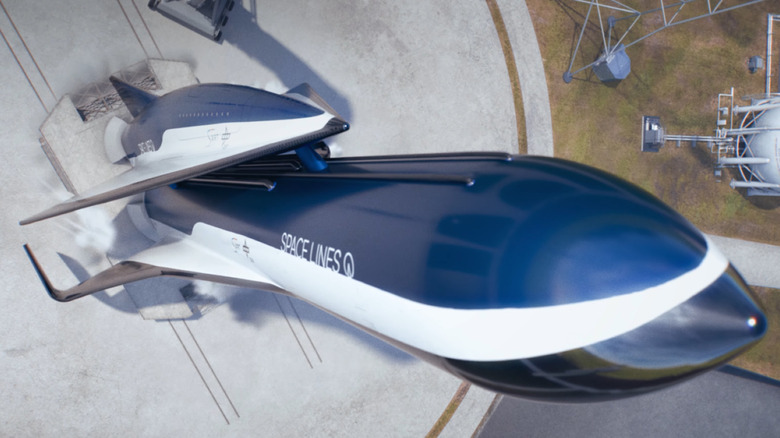
Germany's Aerospace Center (DLR) published a paper in May 2025 proposing a more efficient European version of SpaceX's Starship rocket, with the concept called the RLV C5. The team from DLR studied SpaceX's publicly available data and provided a unique assessment of the rocket's ability. The analysis was built on telemetry data obtained via public broadcasts from SpaceX, which was logged by a text recognition algorithm. The aim of the study is to provide a competitive launch platform for Europe. The key improvement that this team aims to deliver is up to 74% of its mass as payload to low earth orbit, compared to Starship which delivers 40% of its mass to orbit. If accomplished, this would represent a significant advantage over Starship.
By studying the launch data, the team developed an entirely different concept, proposing a design that is similar to that of the Space Shuttle, with a twist. SpaceX's Starship separates from the Super Heavy booster, which lands back at the launch site by firing its Raptor engines. The rocket is then caught by the launch tower's Mechazilla arms, a feat which may change everything about space travel. This landing technique costs extra fuel in order to ensure that the rocket can reduce its speed after reentry and come to a powered hover before being caught.
The team from Europe proposes a rocket that is similarly sized to the Starship, but has a SpaceLiner booster with built-in wings that can be used to glide it, before being caught by a subsonic aircraft mid-air. This SpaceLiner booster concept has been in development since 2005. The RLV C5 also proposes to use liquid hydrogen and liquid oxygen, which are more efficient than the methane and oxygen combination used by Starship.
The RLV C5 has a long way to go
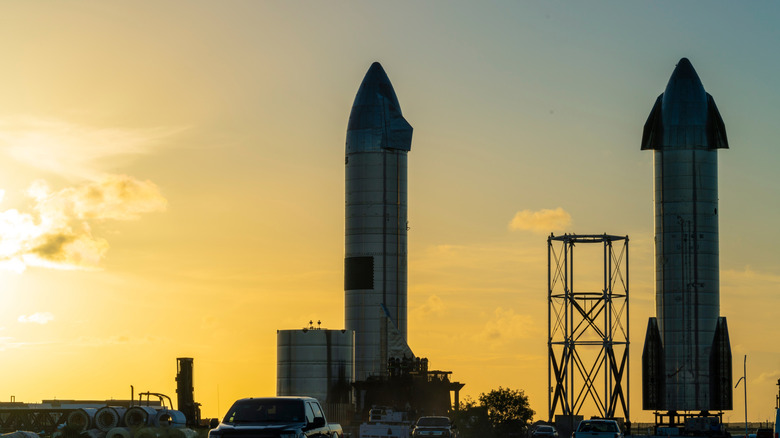
While the concept from the DLR is certainly thought-provoking and innovative, building and flying a rocket of this scale is an enormous undertaking. The biggest problem with the RLV C5 design is that it is still in a conceptual phase, and a lot would have to happen in a short space of time for the idea to take off. The other problem is that SpaceX has set a new bar for the pace of development, so much so that it treats its rocket launches like software updates, rapidly iterating and improving after every test.
By the time the design can see serious investment or production, SpaceX may have improved its own design to such an extent that the European design may already be behind. Since the SpaceLiner concept has never made it into actual production in the 20 years since it was first thought up, it's difficult to imagine the idea taking off. While the team from DLR would be able to lean on key learnings derived from SpaceX's Starship program, developing and building a rocket of this scale would take years to complete. Those charged with the task would have to develop an entirely new rocket with its own heat-shield, rocket engines, and validated gliding performance. Those three concepts were at the center of the Space Shuttle's development hurdles, and required significant funding and time to get right.
Europe's current orbital space initiatives
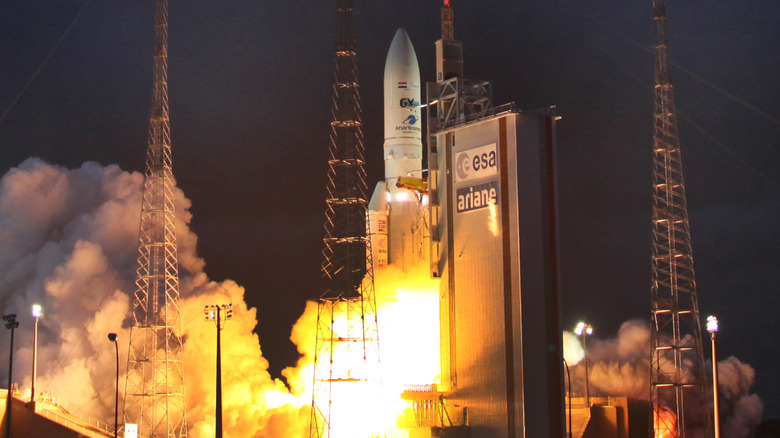
Europe's most established space launch operator is Arianespace, which Amazon is currently using as its secret weapon to compete with SpaceX's Starlink. The company is a multi-national enterprise flying regular launches out of its Guiana Space Center, using the latest Ariane 6 rocket. While the company has a long history of flying unmanned satellite launches to orbit, even the latest iteration of the Ariane rocket is fully expendable, not offering nearly as much cost efficiency as SpaceX does with its current Falcon 9 and Falcon Heavy rockets.
A slew of smaller launch enterprises are developing under the European Space Agency's European Launcher Challenge initiative. However, only one of these companies has made an orbital launch attempt. Isar Aerospace is a German launch provider that launched its Spectrum rocket from Andøya Spaceport in Norway for the first time in March 2025. Even though the rocket failed on the first launch, the company is likely to offer future launch capabilities to compete with Arianespace.
The most innovative company to watch in Europe is MaiaSpace, a subsidiary of ArianeGroup, which intends to launch a two-stage reusable rocket called Maia. This rocket aims to use the same reusability concept seen on the SpaceX Falcon 9, and intends to launch its first test flight either this year or next.