

A Huge Number Of Data Centers Are Set To Be Built In The US, Despite Ongoing Issues
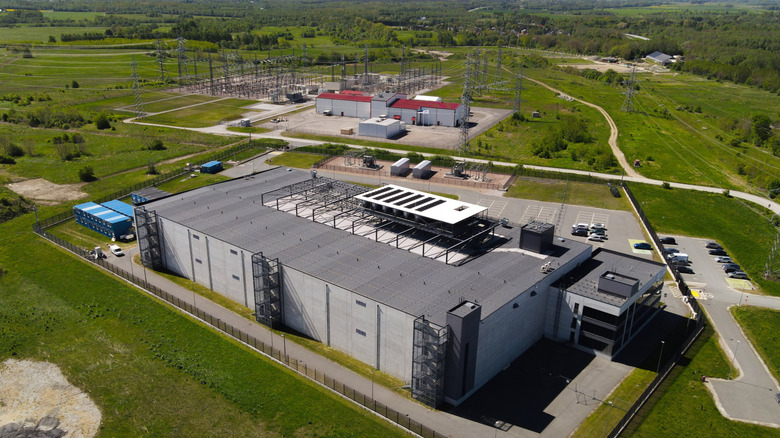
As more and more data centers are being planned and built to keep up with modern computing demands, they remain a concern for the majority of Americans. On a broad scale, data centers consume considerable amounts of electricity and potable water. Meanwhile, at the local level, they cause noise pollution and even air pollution that make it unpleasant and harmful to live near a data center. For these reasons and beyond, 71% of American adults are against them being built near their homes, per polling by Gallum. Communities are also combating data center construction at increasing rates.
However, it doesn't seem like data center development is slowing down at all — in fact, quite the opposite is true. According to a July 2026 report by Synergy Research Group, data center capacity in the United States alone is expected to increase by 200% over the next three years, with more than 700 data centers already on the way. Moreover, Pew Research Center estimates that roughly 1,000 of 1,500 proposed data centers in various stages of development are set to be located in rural areas.
Exact counts are difficult to track, however; different outlets report different numbers. Cleanview, for example, lists over 1,200 operating data centers and 1,760 planned data center projects in the works. The map on Cleanview's website features green dots all over the country that represent planned facilities, while the orange dots that denote operational data centers are merely peppered throughout the map. One thing is certain, though: Several communities are at risk of being impacted by these developments. Energy bill spikes are among the most common problems residents face when data centers are built in their neighborhoods, and the controversial facilities have also been known to impact residential water supplies, namely in drought-prone areas.
Hyperscale operators are scaling aggressively to keep up with demand
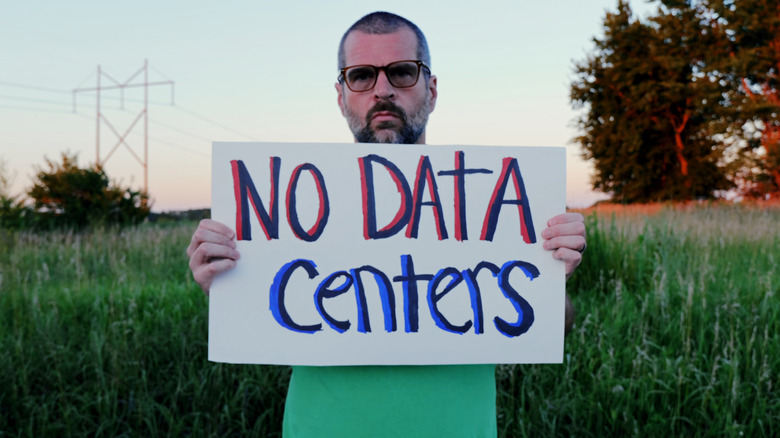
Despite widespread data center protests and the pressing issues presented in them, AI adoption continues to grow, which in turn drives the need for stronger, more robust enterprise and cloud computing solutions. In a discussion with CRN, Synergy Research Group's John Dinsdale, who serves as the company's chief analyst and research director, pointed to this trend as the reason behind persistent data center developments: "Constrained power availability and local protests are [rightfully] getting a lot of attention ... however, the fact remains that the industry needs to be aggressively growing capacity in order to keep up with burgeoning demand for AI services."
Most new data centers are being built by and for hyperscale operators like Google, AWS (Amazon), and Microsoft. Assuming all prospective facilities will be completed as planned, the U.S. will be home to more than half of the world's operational data center capacity within the next five years. In the face of this rapid expansion, however, there is some promising news. Analyst firm Sightline Climate estimates that, due to energy constraints and challenges in procuring the required electrical equipment, 30% to 50% of AI data centers slated to open in 2026 will either be delayed or scrapped (via TechSpot). Heat waves are also proving to be a significant obstacle for data center growth, since hotter outside temperatures yield increased cooling costs.