

US Data Centers Want More Space - So They're Coming For People's Homes
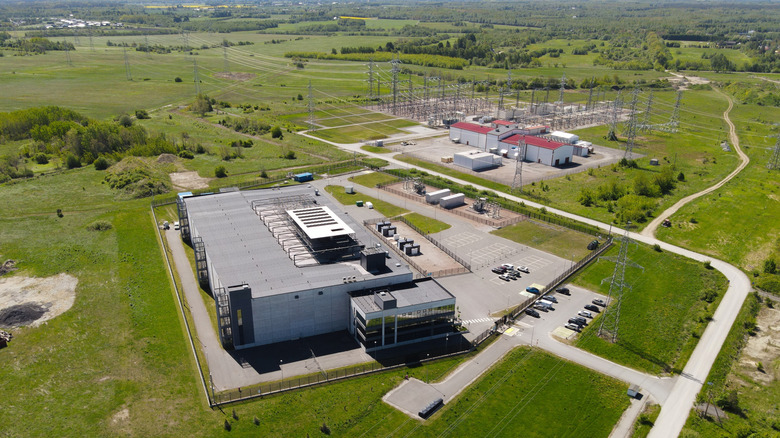
Data centers are already reshaping rural skylines, straining local water supplies, and — as one Iowa campground's regulars found out over July 4 — pushing regular campers out of their usual spots to make room for data center construction crews. Now, to make matters worse, it seems that data centers are coming for people's homes. According to reports, several homeowners, retirees, and even mobile home residents across the country are being told to pack it up and leave, all so a data center or the transmission lines for a data center can go up there instead.
In Georgia, Georgia Power has been pushing to build a new transmission line to help provide energy capacity to meet the demand from new data centers. But to accomplish this task, the company needs to acquire more than 300 parcels of land. Based on reports, the company is taking no chances at homeowners not selling, either, with some telling CBS News that they made a deal to sell because they felt forced to, otherwise the company might have used eminent domain to acquire the property.
This isn't the only story of this type, either. Over in Kentucky, residents of a mobile home park received a letter giving them just 90 days to vacate after their landlord quietly put the property under contract with an unnamed Fortune 500 company that's planning to build a 2,000-acre data center. Despite all this, though, President Trump continues to push for more data centers across America, even appearing in interviews to try and convince Americans that more AI data centers is a good thing. Unfortunately, for some families, that appears to be far from the truth.
Why people are afraid of eminent domain

The sad truth is, the power companies and even the companies behind data centers have a leg up in the ongoing push to take land from homeowners, and it all comes down to the threat of eminent domain. Because while power companies can't force the homeowners to sell to them, they can threaten to and even forcibly take the land thanks to the law of eminent domain.
This law allows the government to take private property and convert it for public use, essentially forcing the owner of the land to give it up for what the government considers "just compensation." And because the government is pushing AI as a "public" benefit — especially in regard to it supposedly lowering power rates for Americans — taking land in this instance is justified by the law.
Of course, those affected by the push don't feel this way. "To us it's theft," Ansley Brown, one of the many affected by Georgia Power's moves told CBS News. Brown says that her mother agreed to sell their family's rural home and land after over a year of pressure from the company, as they were scared that they'd be forced to give it up anyway due to eminent domain. A spokesperson for Georgia Power told CBS that eminent domain is not something it pursues lightly. That, of course, doesn't mean it wasn't on the table. Had Brown's mother not eventually made the call to sell, the company could've pursued that as an avenue to get the land it desired for construction.
One more reason to hate data centers

Opinion on AI data centers has already been at an unsurprising low, with some sharing their experiences online about what it's like to live near one of the big, new data centers. And stories like the ones we're seeing out of Georgia and Kentucky are not going to help with that, no matter how much President Trump triesto assure Americans otherwise.
Concerns around the data centers not only stem from how people might lose their homes, but also extends to how it might affect utility prices, as well as the aforementioned strain it could place on local water sources. There are other ways data centers are harming the environment, too, and all those need to be taken into account as these companies continue to push outward, expanding their reach.
If you think that an AI data center might be built near you, and do want to fight back, then you can attend community meetings and make sure you share your opinions online and with your local politicians. Unfortunately, stories like those from Georgia and Kentucky are likely only going to keep popping up, especially as Trump's push to make America a leader in the AI world continues. It's also worth noting that not all data centers are massive. Some companies are even looking for ways to put data centers in your home, while promising perks such as free internet and reduced power bills.