

Are OnePlus Phones Still Safe To Use?
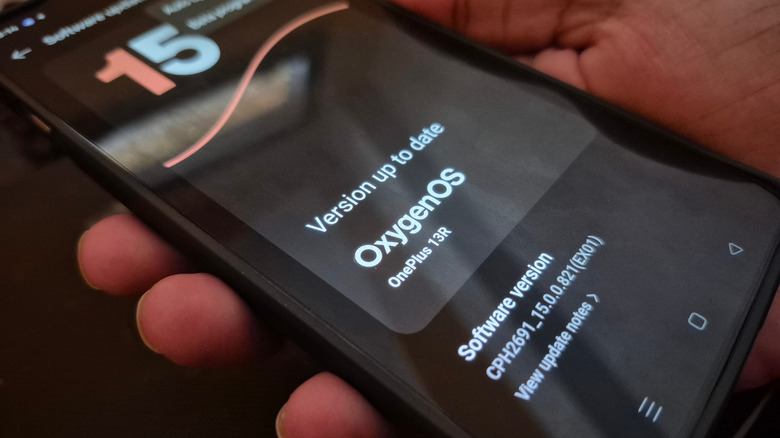
Amid softening demand for new smartphones, China-based Android brand OnePlus has announced it is retrenching from the North American and European markets this year. That means no new phones, no new foldables, no new tablets, and no new earbuds coming to the United States and elsewhere from the storied rebel upstart of 2013. It'll be refocusing in Asia and India where it competes with other Chinese labels, including its own sister company Oppo.
With this move, you might be wondering whether your OnePlus phone is still safe to use. After all, software updates are an important element in defending against digital threats. Well, the good news is that the company will be seeing through its software update promises and covering incidental claims through warranties and its OnePlus Care packages.
We'll detail how long you can expect your OnePlus phone to receive security patches and OS upgrades. As well, there may be some other safety concerns that are swirling in the lead-up to (and in the wake of) this departure.
Will my OnePlus phone still receive software updates?
As BGR has reported, every flagship model since the OnePlus 11 (but excluding the 11R) is getting Android 17, but if you prefer OxygenOS as your software experience of choice, you may not have that option moving forward. In its notice of business adjustment, OnePlus says it'll be making ColorOS 17 — the software skin seen on Oppo phones — available to users, implying that version 16 will be end of the line for OxygenOS. Customers will be able to update to ColorOS 17 as they wish once a build for their device is published, and can also roll back to OxygenOS 16 once a rollback tool is made available. Check the company's support webpages and keep an eye out for messages on your device.
OnePlus has been extending its guarantees through the years, though the steps it has taken haven't been steady. In 2023, flagship phones began receiving four years of Android upgrades and five years of security, while lesser models were getting as low as two years of OS bumps and three years of security. Then, in 2025, the company decided to expand the four-year Android policy across its value 'R' series and its budget-minded Nord phones. OnePlus then lengthen the security coverage to six years for every device.
Every Android device released to North America under these latest policies are still eligible for software updates. Here's how long they'll last:
- OnePlus 11 – security until February 2028
- OnePlus 12R – OS until January 2027, security until January 2028
- OnePlus 12 – OS until January 2028, security until January 2029
- OnePlus 13 and 13R – OS until January 2029, security until January 2031
- OnePlus 15 and 15R – OS until November 2029, security until November 2031
None of the OnePlus Nord devices released in North America still receive support.
Can you trust OnePlus with your data?

Even with OnePlus making pledges to keep its phones viable, there's been weariness towards Chinese influence in the technologies Americans use. TikTok, for example, was the center of a political firestorm that resulted in its Chinese parent company selling the U.S. operating unit over to an American-based joint venture.
So, too, has OnePlus been under the microscope: In June 2025, leading members of a congressional select committee focused on China requested the Commerce Department to investigate the company over potential user privacy backdoors. These allegedly include a system-based screenshotting protocol that "appears to exceed typical device telemetry or debugging," as well as phones maintaining encrypted connections to servers owned by companies tied to the central government. No further developments have been made public in relation to those requests, but the regulatory scrutiny over Chinese firms has not let up.
A more pertinent security concern surfaced in late September last year when cybersecurity firm Rapid7 reported on a major vulnerability. This setting allowed any application to hijack the Telephony service within OxygenOS and read the contents of SMS and MMS messages, as well as their metadata, without permission or even the user knowing. While OnePlus ultimately acknowledged the bug and patched it a few weeks after Rapid7 published its disclosure, it turned out that researchers had been attempting to contact the company's security division since May 1 with very little response. Of the reasons to worry about using your OnePlus phone, the company's seeming lack of urgency over user-submitted vulnerability reports might be the biggest.