

Israel's Powerful 'Iron Beam' Laser Is Going Airborne - Here's How
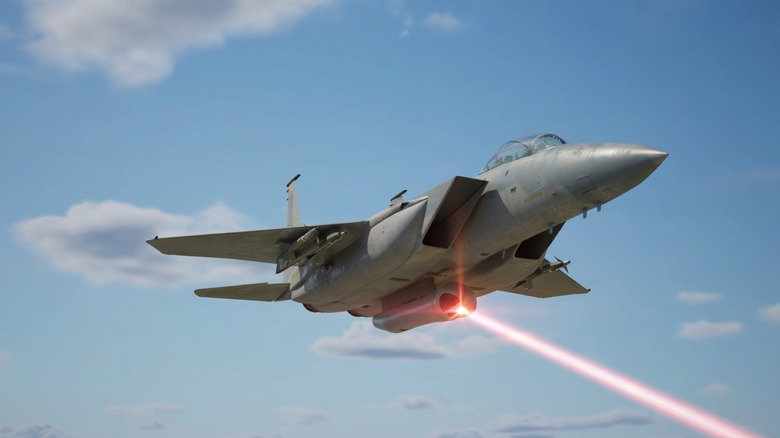
Isreal's laser-based defense system — known as Iron Beam — has been in operation since 2024 as a ground-based solution to protect the country against attacks from aerial drones, missiles, and mortars. Developed by Israeli defense companies Elbit Systems and Rafael, the 100-kilowatt high-energy laser (HEL) system achieved its first operational interceptions during the ongoing Israel-Hamas war, and as proof that this technology works, Ukraine is also testing a similar laser to shoot down drones in its war with Russia. Now, this technology is about to take another leap forward, with Elbit Systems' CEO saying, at an annual results presentation, that the company had been awarded a contract to implement the laser-based system on various aerial platforms.
The company demonstrated the successful deployment of the technology during a test in 2021, where it was integrated with a Cessna single-engine turboprop aircraft and intercepted several UAVs during the course of the tests. In its current form, the Iron Beam system is integrated into mobile container-sized units. In today's conflicts, the deployment of cheaply manufactured, and sometimes improvised drones, has increased exponentially, and neutralizing these highly accurate drones becomes very costly. The key selling point of the technology is its low cost compared to traditional aerial defense systems which use missiles and high-speed cannons.
How airborne lasers destroy UAVs

Rafael and Elbit have marketed the idea that the Iron Beam HEL system could be integrated on F-15 fighter jets and UH-60 helicopters, where it could better intercept drones and even provide self-protection for the aircraft to intercept incoming rockets and missiles. Integrating the Iron Beam laser on an aircraft not only increases the laser's effective range and allows for lower power needs to achieve like-for-like damage compared to ground-based units, but it also aids its effectiveness by eliminating ground-based issues.
One of the key problems with a ground-based laser system is atmospheric interference — the effect air temperature and density have on larger aperture lasers, making the weapon less effective. Instead of using one large laser, Iron Beam uses hundreds of coin-sized laser beams which are directed by a thermal targeting system. The smaller beams are much less prone to dispersion, and the system uses that to its advantage. As each beam travels in the target's direction, the system looks for positive hits, and, within seconds, it can redirect all the other smaller beams to converge on the area where the first hit was observed, concentrating the energy and destroying the target.
High-powered lasers are not only being used on the ground and in the air, but also at sea. The U.S. Navy has tested Lockheed Martin's HELIOS system aboard the USS Preble, and the United Kingdom's Royal Navy recently announced a deal that will equip each of its Type 45 destroyers with state-of-the-art laser weapon called DragonFire.
Airborne laser weapon development in the U.S.
Even as Iron Beam became operational in 2024, the U.S. has been developing its own versions of airborne high-powered laser weapons for some time, the most famous example being the Boeing YAL-1 flying test bed. The modified Boeing 747-400 was fitted with a megawatt-class chemical oxygen-iodine laser which was primarily intended to intercept tactical ballistic missiles. The laser was first test fired in 2007 and successfully intercepted and destroyed two test missiles in 2010. The extremely high cost of the aircraft and its laser eventually led to funding being cut off, leading to the program's cancellation.
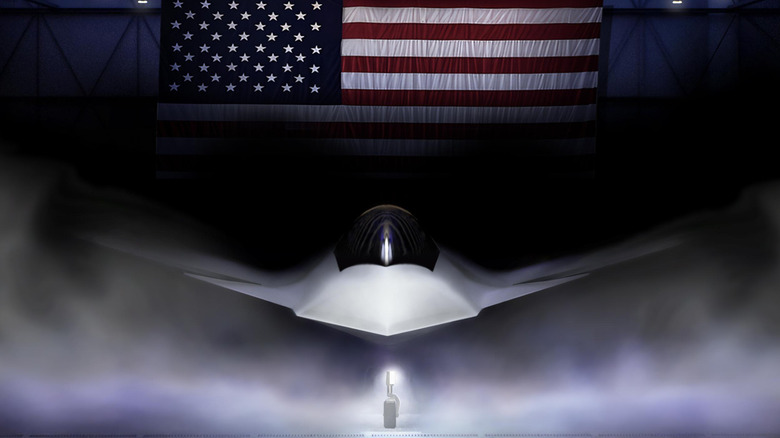
The Air Force had also been pursuing the Self-Protect High Energy Laser Demonstrator (SHiELD) advanced technology program, which was focused on delivering high-powered laser weapons on the ground and in the air. However, after several tests, the program was closed without achieving its goal of deploying operationally. As of 2026, America's latest efforts on delivering such a weapon are centered around the Next Generation Air Dominance (NGAD) program. The recently revealed F-47 next-generation fighter is set to feature a high-powered defensive laser, designed to destroy incoming missiles. The F-47 should have an engine that delivers far superior electrical power than current-generation engines, producing several hundred kilowatts, which will be critical to the success of the laser weapons system.