

4 Of The Biggest Tech Industry Controversies Of 2026 (So Far)

There's no other way to put it: The tech industry is on fire. Between AI data centers hoovering up hardware and increasing prices to unacceptable levels, and the continuous news of layoffs, it's a bad time. Even happier bits of news, like the launch of the Steam Machine, have been mired in apathy as Valve was forced to increase the price to a baseline of $1,049 from a supposed $750.
As 2026 rolls on, it's only anticipated to get worse, and the looming threat of the AI bubble bursting threatens to be as bad as the 2008 or Dot Com crashes before it. It'd be nice to be at least a little funny about things, but outside of the Snapchat CEO wearing ridiculous glasses that crushed his ear, it's very difficult to find comedy in all this. Brain drain, lack of access, and further invasions of privacy are all on the cards.
Of course, there are always things that'll go unlisted, but so far, these are the biggest tech failures of 2026.
AI is ravaging the tech industry

Let's face it, we're all just sitting around waiting for the AI bubble to pop. Artificial intelligence, as it currently stands, is a massive waste of cash that is actively harming the tech industry. While stocks and lines might be on the up and up, the reality is that the technology is equally as harmful to the world as it is making huge waves in the stock market.
Continued reports are being made that not only is AI inducing psychosis, but it is also stripping individuals of their ability to think properly. Towns and cities across America are being infested with data centers that either poison locals or drive them mad with the incessant hum of their cooling systems. Even companies that have opted to work with AI are now failing, ditching, or offloading it, as some products are too expensive or not good enough to replace most of the human workforce, which was a promised result of adopting such technology.
Leaked details of OpenAI's financials vindicate that it's impossible to fund AI companies as they stand. Sam Altman's company has recorded a $38.5 billion loss in 2025. Billions upon billions are burnt every day by Anthropic and OpenAI, while companies using their technology, like Uber, are finding they've already run out of budget for them. Even Microsoft, a multi-trillion-dollar company, has ordered staff to slow down usage of non-Microsoft large-language models, as they are too costly.
Layoffs will continue until stakeholder morale improves

Part of the AI devastation of the tech industry is the mass amount of layoffs. TechCrunch has been tracking these and found that since 2026 began, more than 150,000 people are estimated to have been impacted. TrueUp, which also monitors job cuts, expects 326,000 people will be affected by layoffs by the end of 2026.
As companies pour endless capital into the furnace that is AI, cost-cutting measures are taken. Rather than shifting focus away from AI, companies like Meta and Microsoft have opted to lay off hundreds, if not thousands, of individuals to keep financial growth going. Whenever one of these mass layoffs occurs, the company is typically rewarded with stock price gains.
This has had the unfortunate effect of people opting to leave their chosen fields. A survey conducted by Skillsearch in April found that 44% of game developers are considering leaving the industry entirely, as the job isn't stable enough. And when people with knowledge leave any industry, customers suffer the consequences, as we're seeing with Microsoft's poor handling of Windows 11, which could have been predicted when the company reduced its quality assurance team in 2015.
UK peers at VPNs as under-16s banned from social media
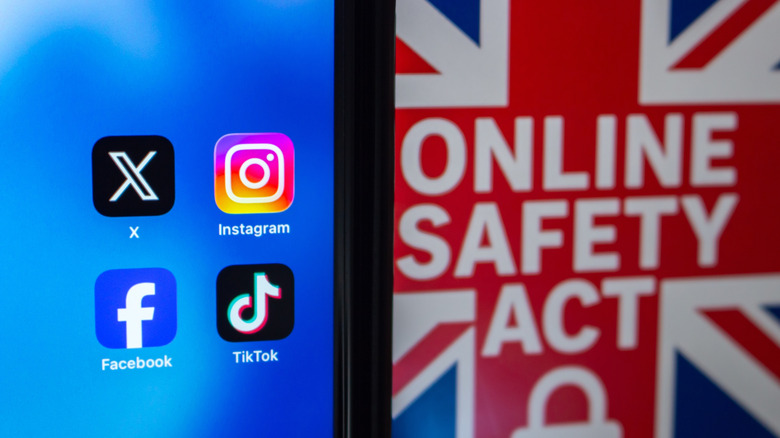
The United Kingdom's government, Labour, announced it would ban under-16s from social media. While there's plenty of evidence that kids shouldn't have access to these platforms, including recent cases that prove social media apps were designed to be addictive, the ban comes at a much higher cost. In 2025, the Online Safety Act 2023 rolled out, forcing age verification on adult content by handing over ID, your face, or a credit card.
All of these restrictions are very easily beaten by simply using a VPN to connect to a different country. Now, Labour's Secretary of Technology, Liz Kendall, has issued a vague threat to VPNs: The party will announce new guidance later in the summer. However, there's huge concern about further restrictions to the internet and access to VPNs, with one of the verification companies involved being linked to billionaire and world political interferer Peter Thiel, who co-founded Palantir. Another UK-based verifier was fined in Spain for mishandling data. In France, a verification company was hacked, and IDs were sold online.
However, this will be and is already a spectacular failure. There's a good possibility this will push under-16s, adults, or those less technologically literate toward more extreme circumvention software, like the Chinese V2Ray protocol or Tor Browser, which could leave them vulnerable to malicious actors or sites on the deep web. With the dangers of vibe coding so firmly rooted, it's not unwise to expect an AI-generated method to bypass the U.K.'s restrictions, leaving people open to further risks. It's also unclear how this potential ruling would affect those in jobs that require an element of security.
Microsoft vs. Nightmare Eclipse

We could probably make an entire piece on how Microsoft has continually walked into rakes like Sideshow Bob in "The Simpsons" throughout 2026. However, one of the more dangerous and incredibly daft responses the company has taken in the last few months is to go after a researcher who has discovered critical bugs in Windows. Across a few weeks in 2026, a pen tester under the name "Chaotic Eclipse" or "Nightmare Eclipse" has been reporting "zero-day exploits," which are issues in software that developers haven't had time to fix yet.
Zero-day exploits are hugely important to patch, as once the information is out there, it's only a matter of time before someone uses it maliciously. Eclipse had reported finding exploits for Microsoft's bug bounty program, which pays out if the issue can be recreated and patched. However, Microsoft has either actively not paid or ignored Eclipse, or worked to ban them from highlighting these issues online.
An example is a recent issue found on June 10, 2026. This impacts BitLocker, allowing malicious actors with administrator access on Windows to bypass BitLocker completely. A cybersecurity company has already found exploits highlighted by Eclipse to Microsoft in active use. Effectively, Microsoft is burying its head in the sand, and leaving its users at active risk — and not just because an official Windows Update broke the whole computer ... again.