

These Xbox Controllers Miss An Important Feature (And It Makes Sense Why)
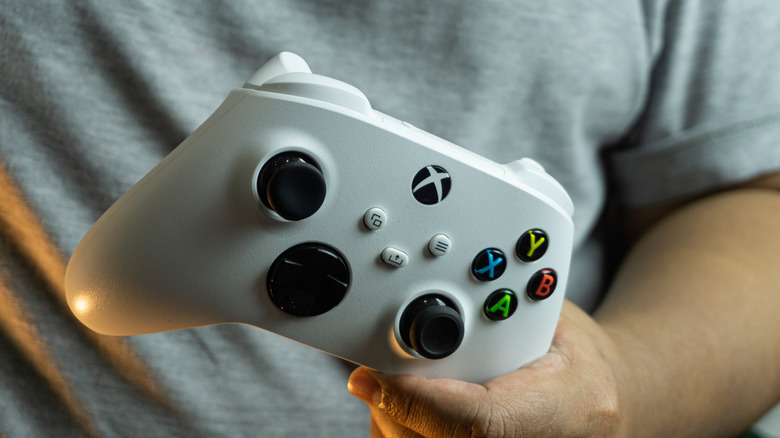
Microsoft has refreshed its Xbox Series X/S controllers to eliminate the expansion port, meaning it's yet another Microsoft feature that's been sent to the tech underworld. There's a good reason for this refresh to get rid of the port, as neither Microsoft nor its hardware partners have made a meaningful accessory compatible with it in years.
The expansion port, as we know it, was introduced with the Xbox 360, with its major use being that of a keyboard or headset connector. It makes complete logical sense to boot the port, as Xbox and its accessory partners have moved on to better alternatives. Xbox continued releasing adapters for headsets and a keyboard for the expansion port, even for the Series X|S, but newer headsets did away with the port in favor of the 3.5mm jack on the controller. Gaming headsets, including Xbox's flagship, also use Bluetooth or 2.4GHz wireless connections. For keyboards, USB and wireless USB dongle-based connections have largely become standard, reflecting broader industry-wide adoption.
Goodbye, Xbox controller expansion port, we hardly knew ya
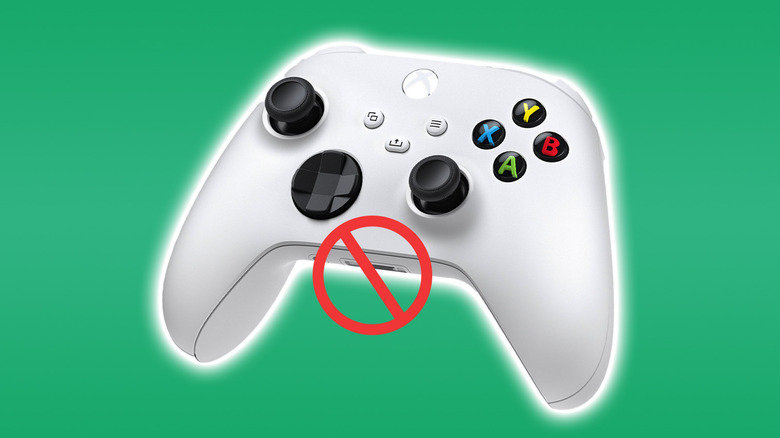
Microsoft hasn't come out with an official reason for the removal, though it's likely due to obsolescence. Microsoft hasn't announced a release date or updated pricing for future controllers without expansion ports. However, Forza Horizon 6's controller doesn't feature the port, and it's generally priced at $89.99, but this is also a limited-edition product. Standard wireless Xbox Series X/S controllers with the expansion port typically cost about $49.99. Storefronts still stocking the controller's expansion port accessory pool are mostly filled with third-party versions.
As the expansion port is phased out, Xbox continues to refine its hardware strategy ahead of future platform updates. Over the next 100 days, as of June 10, 2026, one of Xbox's primary goals is forming a new business model and partnerships, as increasing hardware component costs aren't allowing the division to meet consumer console demand. These hardware goals will be crucial to developing Project Helix, the codename for Xbox's next-generation console.