

Your Pokémon Go Camera Data Was Actually Used To Train A Military Spy Drone System
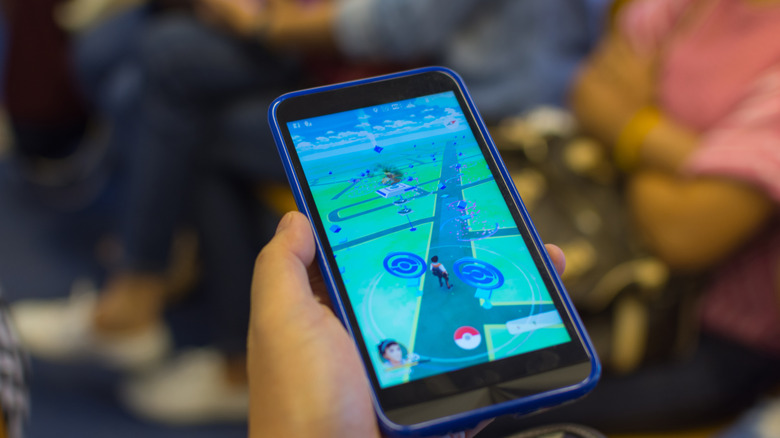
In 2016, almost everyone was walking about with their phones out, looking for Pokémon to catch. That's when "Pokémon Go" took the world by storm. As the game expanded and evolved, so too did the players' involvement, with more and more filming the parks, streets, businesses, and other places they visited in their hunt for the favorite Pokémon. However, all of the data that Niantic has spent a decade gathering is being used for something that many users might not have expected.
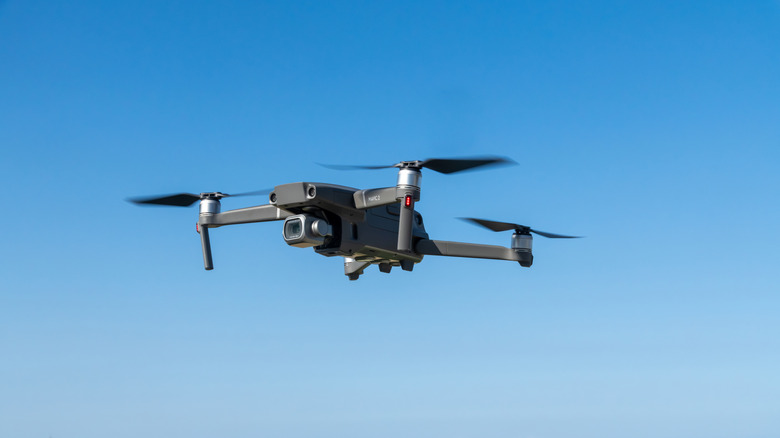
According to Dutch newspaper Trouw, environmental scans taken by "Pokémon Go" players in their quest to catch more of the popular pocket monsters are now being used as part of a partnership between Niantic Spatial and Vantor, a defense and intelligence firm, to train a camera-based AI model that is now being built into military drones and robots. The partnership with Vantor was announced initially in 2025, with Niantic Spatial noting that it would help deliver an "integrated visual positioning system" that will work as a redundancy for GPS systems should they go down.
Pokemon Go scans could power future drone navigation
When "Pokémon Go" first released, it was under Niantic Labs. At the time, what would become Niantic Spatial and the developers behind "Pokémon Go" were all part of the same company. When 2025 rolled around, Niantic Labs sold "Pokémon Go" and other games to Scopely for $3.5 billion, but that purchase did not include Niantic's AR division, which expanded into Niantic Spatial.
It is this spinoff company that made a deal with Vantor in 2025 to use the AR and spatial data that "Pokemon Go" players have collected to help train its AI model. As for how the system worked exactly, Niantic took the data scans that players captured and then used those to create a massive 3D visual map. This map can then be used to let a machine determine where it is in the world by sight. This would be useful if the satellite signal were to fail, which would help expand the capabilities of drones in military operations.
However, it isn't the fact that this happened that is surprising. Instead, it's the origins of the data that helped supply such a feat, and additionally whether the general public that helped fuel this data collection had any idea their content would be used for such a thing.
Why this is troubling for some
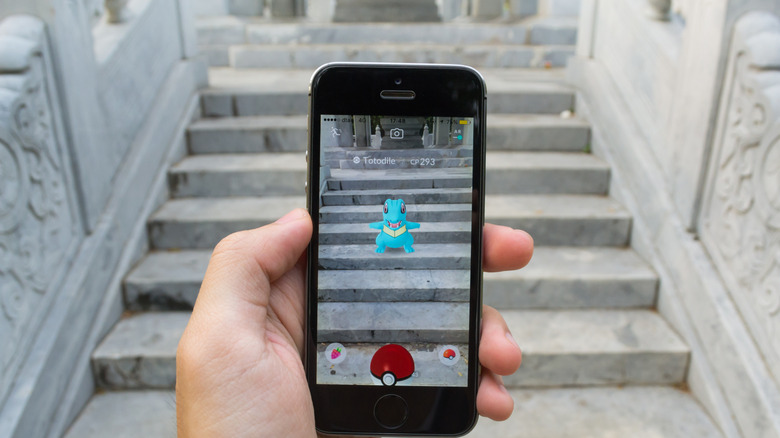
The primary reason that this is troubling for many is because for the majority of people playing "Pokémon Go," they never really thought about what kind of terms Niantic asked them to agree to. Or whether or not the data they were capturing to get free items and rewards would actually be used for something that some might consider nefarious.
According to Trouw's report, one Dutch resident downloaded "Pokémon Go" way back in 2016, never imagining that scanning the world around him would lead to such an occurrence. In fact, the resident in question told Trouw he even scanned his own apartment and was "just playing a game." Further, nearly 30 billion scans were reportedly taken since "Pokémon Go" released this feature in 2021 and the deal with Vantor.
Perhaps the one bright spot here is that Vantor says it did not use data captured from "Pokémon Go" players to fuel the model used in drones. Not everyone is convinced, though, and some believe that this kind of advancement for the system would not have been possible without the scans from "Pokémon Go." Others on social media say they saw something like this coming. The unfortunate truth here is that even if they were used, there is not much that players can do, as Niantic even asked for additional agreement for users to record and keep the data captured by their cameras. Which means it was given voluntarily.
A spokesperson from Niantic Spatial reached out to BGR after this story's initial publishing and confirmed that AR scanning and the subsequent sharing of that data with Niantic Spatial were discontinued as part of the deal when Scopely purchased "Pokémon Go" in 2025. The spokesperson, however, did not deny the use of "Pokémon Go" players' AR scans being used to build the maps training Vantor's AI models prior to the deal.