

4 Reasons Why You Should Be Using Your Phone's Dual SIM Feature
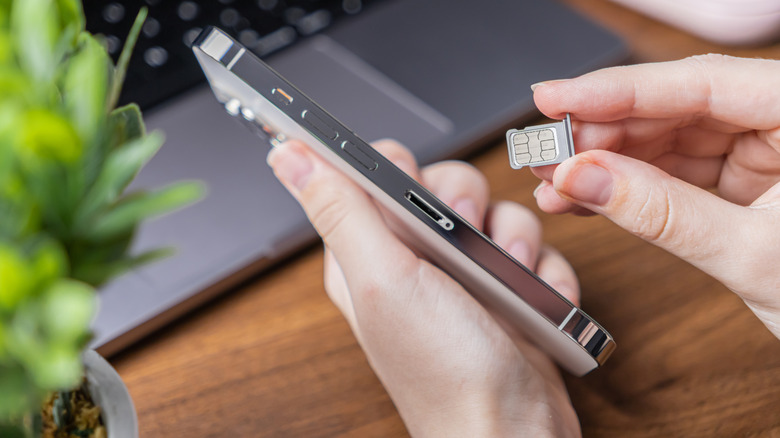
Many modern smartphones, whether they're Androids or iPhones, have a dual-SIM feature. That means they can use two SIM cards, whether it's two physical SIMs, two eSIMs, or a combination of a physical SIM and an eSIM. Yet, there are some people who ignore it, opting to use one SIM card instead. If you are one of them, you might be underutilizing your phone because this single feature can give you more control over your communication.
It's possible that you're just unaware that your phone can use two SIM cards. Before you get excited, you need to check. If you have an iPhone X or newer, it can use a nano-SIM and an eSIM. For Androids, it depends on the manufacturer, but you can check your phone's network settings to see if there's an option for SIM 2 or an eSIM. If you're still unsure, pop open the SIM slot and see if there are two SIM slots.
With the dual-SIM feature, you can use two numbers, networks, and plans without purchasing a second phone. Benefits include more coverage and cheaper rates, and the ability to separate work and personal life. It's also great for avoiding roaming charges when traveling and transitioning to a new mobile carrier. Once you consider all the perks that come with dual-SIM cards, what you get is not just a nice perk that is included in your phone, but a practical tool for solving a wide range of practical problems.
Get more coverage and cheaper rates
There are several disadvantages that come with just using a single network. Suppose you're traveling from one city to another and you enter an area with no coverage. You ask the person next to you if they're experiencing the same problem, but they tell you their coverage is perfectly fine since they're on another network. If only you had that provider's SIM card, you could easily switch and not lose your ability to communicate or use the internet. This can be especially useful if you run into an emergency.
Other than switching to a different network, you can also double-dip on the benefits that different cellular providers offer. Suppose your main mobile carrier has a good plan with unlimited texting and calling, but very expensive data plans. If you stream on your phone, you can easily reach that limit in no time. If there's another provider that offers higher data caps at an affordable price, you can purchase their SIM card and switch to it during heavy streaming sessions. Just be sure to set up a PIN for both SIMs to make them safer to use.
Separate work and personal life

There are times when you can miss an important call because your phone is busy. You're making a plan with your friend over the phone, but at the same time an important client or your boss is trying to reach you. It's times like these when not answering a call can set you back. If you're using the dual-SIM feature, however, you can see that someone important is calling you on your other number. You can put the other person on hold or tell them you will call them back and handle that business.
It can also come in handy if you normally make work calls that you need to be reimbursed for. When it's just one SIM card, those calls can easily become mixed in with the personal ones you made, making it hard to separate them when it comes time to audit your phone bill. With two SIMs, everything is neat and separated. Keep in mind that not all dual-SIM phones are the same.
Some phones operate in Dual SIM Dual Standby (DSDS) mode, where the SIMs are on standby waiting for a call or text. However, when one is actively used, the other becomes inactive. Other phones operate in Dual SIM Dual Active (DSDA) mode, where both SIMs are active at all times, which is suitable for the scenario described above. The caveat is that phones with this mode are more expensive, and managing two active networks can drain the battery faster.
Save money on roaming charges

When you're traveling abroad, you can still use your SIM card to call, text, and access the internet. Your mobile service provider probably has partners around the world that allow its users to connect to their network, so they still have coverage while traveling. This is called international roaming, and the rates can be expensive. The cheapest option is to purchase a local SIM card when you get to your destination and make that your SIM 2. That way, you can take advantage of the local data rates, which can be cheaper, without swapping out your original SIM card.
If you're going to visit more than one country during your travels, you also have the option to get an international SIM card. These can give you more coverage since they aren't locked to one country. International SIM cards can be physical or an eSIM — you just need to order the former in advance, while the eSIM can be downloaded and installed remotely.
Just be sure to unlock your phone before leaving if your phone carrier has locked it. If you don't, it won't work with foreign SIM cards. You don't want to find that out when you get to the other country. Your carrier can unlock the phone for free if it meets certain eligibility requirements. If you want to unlock the phone early, the carrier may charge you a fee. You can also unlock it using a third party, but this could be more expensive.
Test out a new mobile carrier before switching
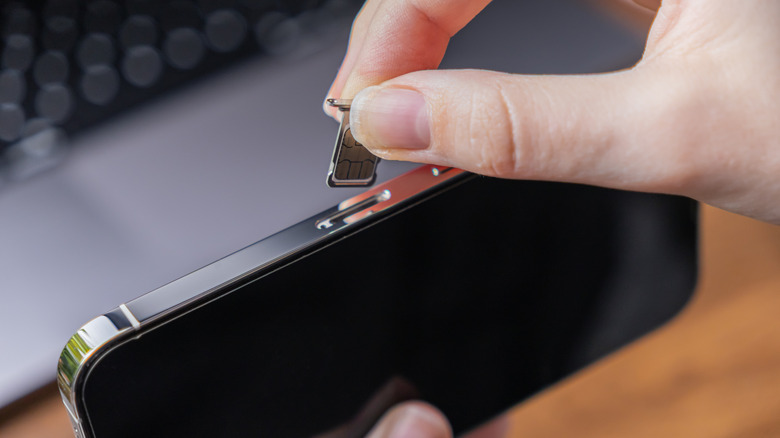
Sticking with a mobile carrier that you're unhappy with can be easier than going through the hassle of switching. But over time, dealing with hidden charges, added services you didn't ask for, price hikes, and even straight-up fraud can take an emotional and financial toll. Switching immediately can be jarring, considering you have to do things like notify everyone of your new number (you can transfer your old number to a new SIM, but that also has its own hurdles), pay off your contract so the phone can be unlocked, and deal with the decision fatigue that comes with finding a new carrier.
Rather than switch carriers immediately and face potential regret, use your phone's dual-SIM feature to test the waters. Many mobile carriers offer a free trial period that you can take advantage of, making the process less costly and significantly easier to cancel if the SIM card doesn't suit your needs. For example, T-Mobile offers a free trial that gives you an eSIM and all the benefits that the carrier provides, including high internet data speeds, for 30 days. With that said, just be more cautious of these phone carriers that users say you should avoid.