

5 Older Point-And-Shoot Cameras Still Worth Buying In 2026
We may receive a commission on purchases made from links.
Point-and-shoot cameras have carved out a devoted following among photographers who want to shed heavy, professionally minded gear for more personal and portable shooting. They're typically compact enough to slip into a jacket pocket, yet still utilize high-quality image sensors and autofocus systems. Point-and-shoot cameras can be found in the hands of professional street photographers, but they also have strong footing among hobbyists looking to document their daily lives and parents hoping to capture high-quality memories.
Over the years, the point-and-shoot market was upended with the improvements in smartphone cameras. The average person often found what they needed out of a camera in flagship phone offerings. But as it tends to do, the market has come full circle. Old 2000s digital cameras are popular again, and a lot of photographers are remembering the benefits of a dedicated camera. Point-and-shoot cameras come with larger sensors than smartphones, the lens systems offer much better optical quality, and the ergonomics are more intuitive than an entirely touchscreen camera.
Newer point-and-shoot cameras like the Fujifilm X100VI and the Panasonic Lumix ZS99 can be difficult to find in stock. This has a lot of people turning to older point-and-shoot cameras, though this increase in popularity is also triggering an increase in pricing. Some of these cameras even cost more on the used market than they did when they were originally released. But a lot of older point-and-shoot cameras still hold up well for photographers of all experience levels, which is why we've decided to take our hands-on experience with such cameras and sort through which of them are still worth buying.
Fujifilm X100F
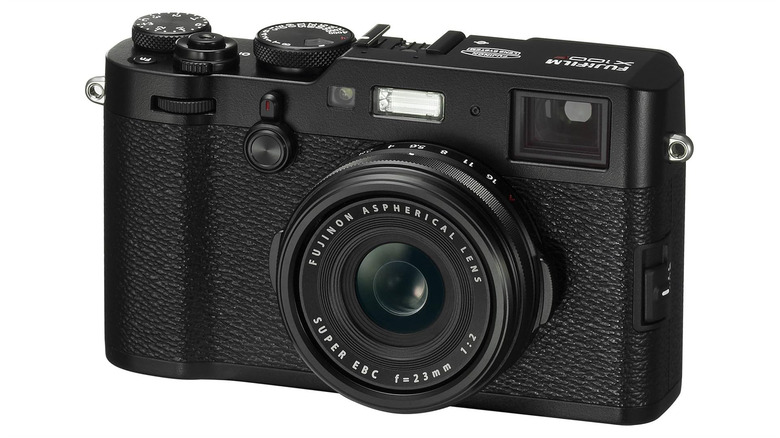
Fujifilm launched its X100 point-and-shoot camera lineup in 2013, and the Fujifilm X100F is the fourth iteration of the camera. The Fujifilm name is incredibly popular among street photographers, and everyday shooters are becoming more aware of what it has to offer, with its newer X Half point-and-shoot among some of the affordable cameras that make photography more fun. But the X100F is much closer to a piece of professional gear, utilizing a 24.3-megapixel APS-C sensor and a fixed 23 mm f/2 lens.
While it was released in 2017, the build quality and image quality of the X100F still hold up well today, and it has a wide variety of film simulations to choose from, which is part of the draw to Fujifilm cameras. The brand has created built-in simulations that are designed to replicate its old film stocks. The X100F isn't going to have nearly as many simulation options as newer releases in the X100 lineup, but there are still plenty to choose from. In fact, Fujifilm's film simulations have always made the X100 lineup popular among photographers who want to get their image perfect without any post-editing.
Large camera retailers like Adorama often have used Fujifilm X100F models available. Models graded well in terms of their condition can go for nearly $1,350, though eBay is always an option for finding the X100F at a lower price. Fujifilm really modernized this camera with the two releases that have come since the X100F, but the X100F still offers impressive point-and-shoot image quality for significantly less than the X100VI's $1,799 price.
Panasonic Lumix LX100
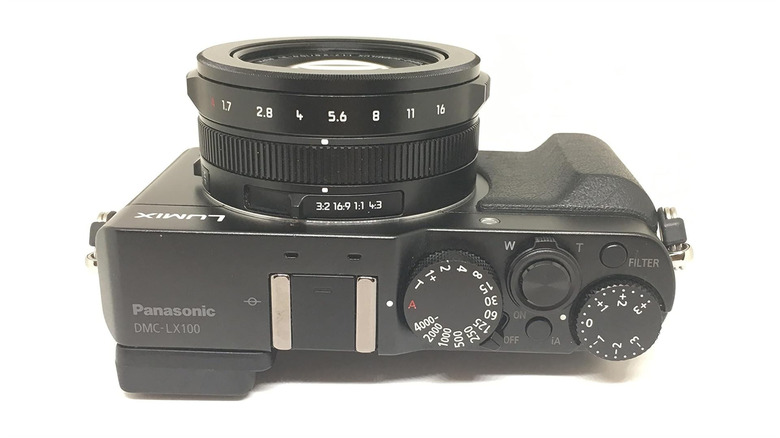
The Panasonic Lumix LX100 is another longtime favorite among point-and-shoot enthusiasts. It was released in 2014, and it's the first fixed-lens compact camera that Panasonic ever paired with a Micro Four-Thirds image sensor. Panasonic also gave the camera a 24-75 mm zoom lens with a variable aperture of f/1.7-2.8. At the time of its release, the Lumix LX100 felt as much like a high-end mirrorless camera as a point-and-shoot that could nearly fit into a pants pocket.
Many of this camera's specs were ahead of their time, and that's what makes the Lumix LX100 still worth buying today. The fast apertures available throughout the zoom range can be difficult to find in contemporary cameras, and access to tools like exposure compensation should give the camera more appeal to more professionally minded shooters. This camera also supports 4K video recording, which was nearly unheard of in cameras at the time of its release, and is now standard among new cameras hitting the market.
One knock on the Lumix LX100 has always been its lower pixel count. It utilizes a 16-megapixel sensor, but the lens system crops it down to 12.7 megapixels at most. That's certainly low compared to what you'll find in cameras being released today, but megapixels aren't the most important feature of a camera. Plenty of photographers have been producing incredible work with the Panasonic Lumix LX100 over the decade that has passed since its release, and now you can find it on eBay priced anywhere from $400 to $600.
Canon PowerShot G7X Mark III
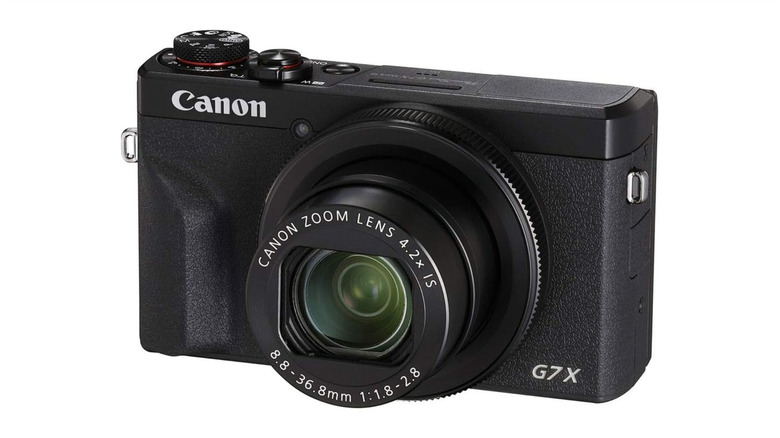
In 2019, Canon released the Canon PowerShot G7X Mark III. It is the third iteration of the popular G7X point-and-shoot camera series. It has a 1-inch sensor that produces quality images for photographers, but the G7X Mark III became a hit among content creators because it also has a 3.5 mm microphone input and the ability to live stream video over a Wi-Fi connection. It's even capable of recording video in vertical formats, which is something now found on almost all cameras made for content creators.
But what makes the Canon PowerShot G7X Mark III still worth buying today is the fact that it's still the latest iteration of the G7X lineup. Canon did so well with this camera that it hasn't yet felt the need to release an update. Its 20-megapixel sensor offers plenty of resolution even by today's pixel-peeping standards, and its video features include Full HD slow motion recording at 120 frames per second.
This camera is, however, another point-and-shoot that has skyrocketed in price over the years. Canon has it listed for $880 on its website (though it's often out of stock), but the G7X Mark III ranges in price at Amazon from $1,500 to $1,900, depending upon which accessory bundle you prefer. But used models are available, and until Canon releases an updated version of the PowerShot G7X, the Mark III remains one of the most feature-packed point-and-shoot cameras the company makes.
Sony Cyber-Shot RX100 V
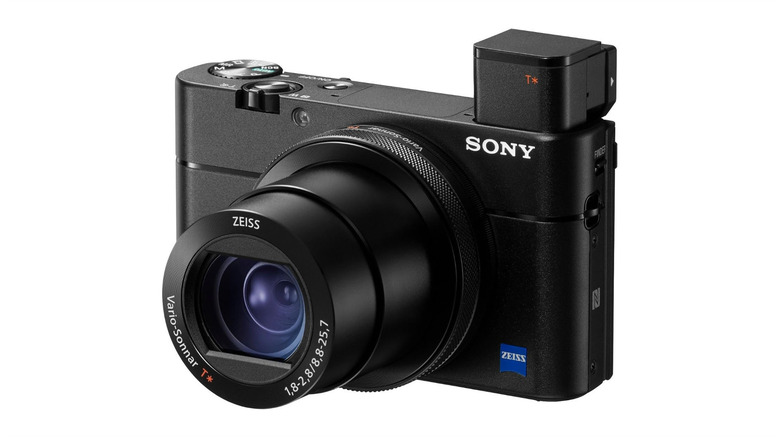
Canon's longtime consumer rival Sony also has a point-and-shoot that's still worth buying, and like the Canon PowerShot G7X Mark III, the Sony Cyber-Shot RX100 V is still available to purchase brand-new. It's priced as low as $1,328 on Amazon, though it's available at a number of different price points depending on whether you want to bundle accessories or track a used model down on eBay or through third-party resellers.
The Sony RX100 point-and-shoot lineup has been around for some time, but the RX100 V was released in 2016. It utilizes a 1-inch sensor and a 24-70 mm zoom lens that has a variable aperture of f/1.8-2.8. At the time of its release, the RX100 V's autofocus was a major selling point. Sony made the camera friendly to newcomers who were suddenly more interested in photography because of the capabilities of their smartphone by including speedy autofocus and highly capable autoexposure.
Sony is notorious for cannibalizing its RX100 cameras. Despite the fact that you can still purchase the RX100 V brand new, there are several newer versions of the camera on the market. This may make it feel like you're purchasing a new camera that's already out of date in terms of features, but Sony did manage to load the RX100 V up when it sent it to market. The video features alone make it still worth buying, and its functionality as a pocketable point-and-shoot remains appealing to photographers who want to work light.
Ricoh GR IIIx HDF
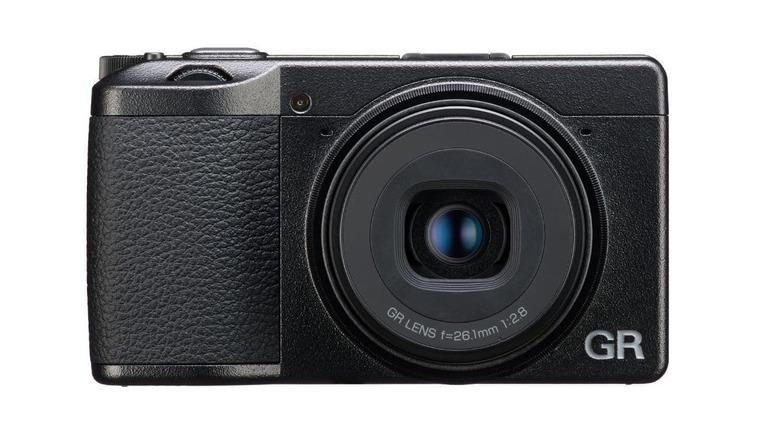
The Ricoh GR series dates all the way back to 1996 with the GR1 film camera, though Ricoh has made a hit out of its digital lineup as well. The GR III is a point-and-shoot camera released in 2019 that utilizes a 24-megapixel APS-C sensor and a 28 mm full-frame-equivalent lens with an f/2.8 aperture. There are several models in the GR III lineup, including the Ricoh GR IIIx, which features a 40 mm full-frame-equivalent lens, and the Ricoh GR IIIx HDF, which features a built-in highlight diffusion filter.
Ricoh only recently released the GR IV, which makes a lot of the hardware in the GR IIIx still relevant today. The 24-megapixel APS-C sensor is quite large as point-and-shoot cameras go, and it's the kind of sensor that's typically reserved for mirrorless and even DSLR cameras. Ricoh has a dedicated user base, and the GR point-and-shoot lineup is a big reason why. The camera is small enough to fit in a shirt pocket, yet contains hardware that is difficult to find in cameras of this size.
The GR IIIx, however, is also known for some of its limitations. The camera doesn't have a viewfinder, which means all exposure settings and framing need to be handled by using the camera's touchscreen. Limiting things further is the fact that the screen doesn't tilt, flip out, or move in any way. This may not hinder photographers who are new to a dedicated camera, but those who have already developed shooting styles that require a viewfinder or the ability to see the screen from different angles may not enjoy shooting with the Ricoh GR IIIx.
How we selected these point-and-shoot cameras

Used cameras have always been popular, as they're usually more affordable alternatives to newer camera models. Older point-and-shoot cameras have a particularly wide range of options, with just about every camera brand dipping its toe into the market at some point over the years. Because of this, hands-on experience with specific cameras and contextual knowledge are important.
We have years of hands-on experience with point-and-shoot cameras across a number of brands, and we leaned on that heavily in making these selections. We have also been present through numerous rounds of camera and photography-related tech releases, so we were around to understand why these cameras mattered at the time of their release as well as why they're still relevant today.
With prices on the rise for new cameras, our goal here was to provide alternative options. The older point-and-shoot cameras we've selected are here because they provide value as an alternative to newer models, or because they offer features and hardware that are still relevant today and hold their value despite rising prices on the used market.