

5 Of The Weirdest Pieces Of Tech Found In Lost Luggage
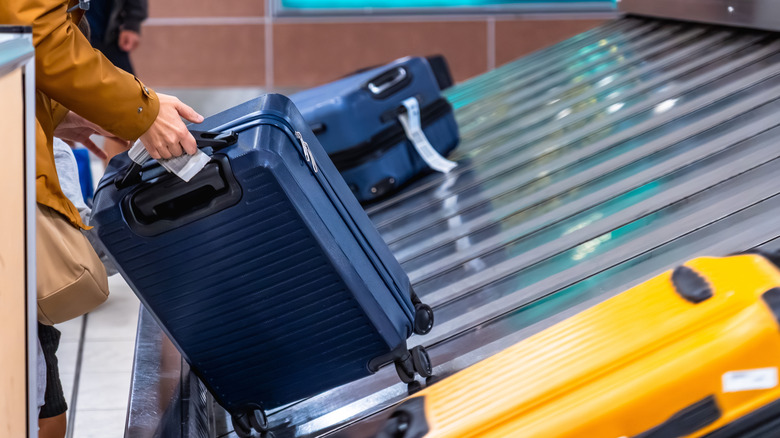
Losing your luggage can be awful. Despite claims of 99.9% of people being reunited with their lost suitcases, sometimes things get lost in the mix. One company, Unclaimed Baggage, has been collecting and reselling lost luggage since the 1970s. Since 2023, the company has put out an annual report highlighting some of the oddities that it has come into contact with.
With 2026's report now released, we've taken a look at that and the prior reports to collate some of the weirdest bits of tech that have been lost during travel. Surprisingly, it's not entirely just missing iPads and headphones. A total of 51,449 phones were found in the lost luggage, while tablets accounted for 34,867 of the lost items. Headphones sat in the middle at 40,433.
Unclaimed Baggage has found a bunch of bizarre items, but today, let's focus on the lost tech. And if you don't want one of your gadgets showing up on next year's list, you might want to take this as a sign to look into Apple's new and improved AirTags or one of the best AirTag alternatives for Android.
1. A robot
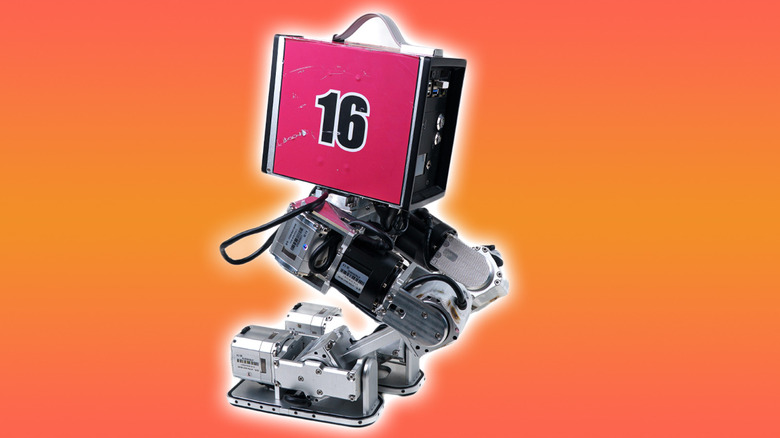
One of the headlining pieces of luggage found was a robot. There's barely any information on the bipedal machine, with Unclaimed Baggage not entirely sure of its function. Other than the number 16 being plastered on the side of the pink box, there's not much information about where it came from. It did feature in Unclaimed Baggage's pop-up gallery in New York City, but no information appears to have come out about it.
Robotics has been advancing at a massive rate in recent months and years. From Disney implementing autonomous bots that roam its theme parks to Nvidia bringing a gaggle of them on stage during a keynote, it's the next real frontier for tech companies. So it's not too much of a stretch that someone might have packed a robot for demonstration or pitching the device on a commercial level.
Without much information about the robot in the weeks since the report was released, it's a genuine mystery. There's clearly a small PC acting as its brain, with the back of the device looking very similar to a Raspberry Pi. The motors connected to the legs are sourced from High Torque, a Chinese-based manufacturer. Presumably, the robot would use the Raspberry Pi combined with custom software and hardware, like a HAT, or use the General Purpose Input Output pins to feed the device with instructions.
2. Toilet seat
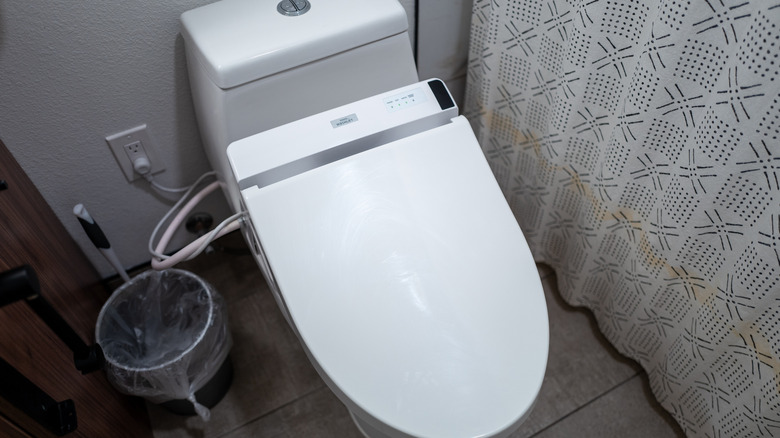
In the 2025 report, Unclaimed Baggage revealed it discovered an entire electronic toilet seat. Complete with a bidet, the seat is likely the Toto Washlet C5, with the latest version of the smart toilet accessory going for around $400 on Amazon. Imagine losing your luggage, but then also finding out your really expensive toilet seat has also been lost and publicized in a report.
The seat itself is highly rated, with customers praising its cleaning equipment and the hot water it can produce. This particular model pales a little in comparison to the more expensive variations of the seat, as it only has a tank for the hot water. Other, more expensive models can produce a continuous stream of warm water.
Toto, a Japanese company, has been around since 1917, with factories around the world. Currently, there are locations and factories in India, Thailand, Bangladesh, and the United States. Since the 1980s, Toto has sold over 60 million seats in the Washlet line, and in a press release, the company appears very proud about how legendary drummer Matt Sorum (Guns N' Roses, Velvet Revolver) included one of its seats in his home remodeling.
3. 1900s Kellogg candlestick telephone
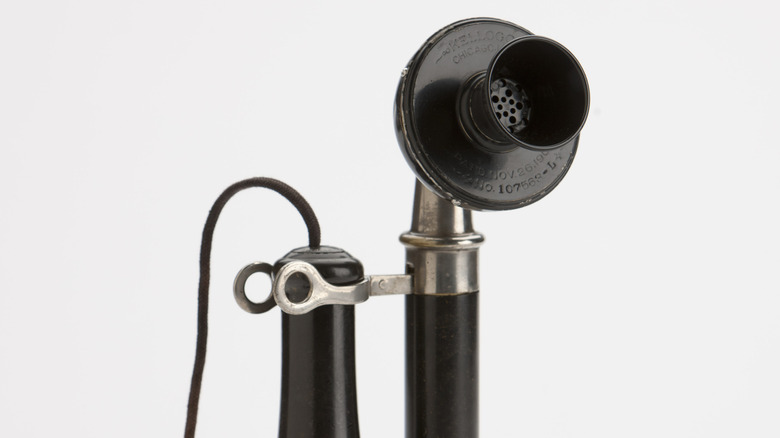
Thousands of phones and tablets get lost with luggage, if the report is to be believed. However, it probably wasn't on anyone's bingo card that a vintage Kellogg candlestick phone would show up. Made in the 1900s, Kellogg was one of the first manufacturers to integrate the transmitter and receiver into one device.
The model found appears to be one of these integrated designs, but Unclaimed Baggage provides no information online about how it was found. Further research indicates that it is likely the No. 64 Candlestick model, made to stand on a desk. It is constructed with nickel-plated brass and was used through the early 1900s.
Kellogg wasn't just a maker of phones, leaping on the chance to set up a switchboard for independent companies that were starting to appear where American Bell hadn't yet reached. In response, American Bell, also known as the Bell Telephone Company prior to merging with the American Speaking Telephone Company in 1880, purchased a controlling interest of Kellogg shares in 1901. By 1909, however, the Illinois Supreme Court ordered this sale to be reversed, and ultimately, American Bell became the company we now know as AT&T.
4. Bionic knee
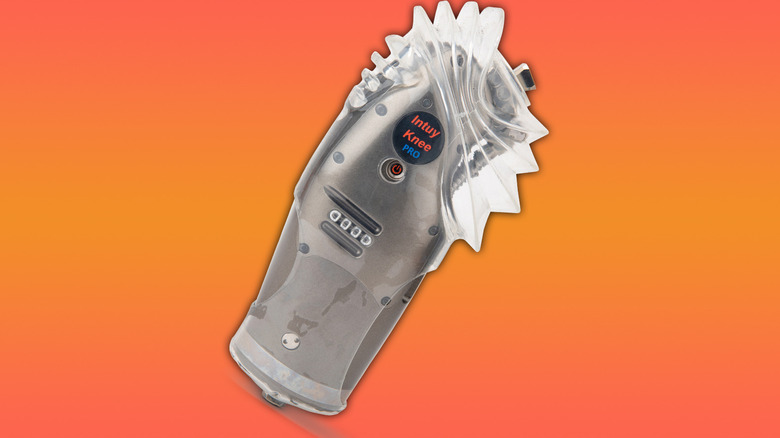
Losing a toilet seat is one thing, but losing an entire knee? That's one piece of lost luggage you'd expect someone to track down. According to Unclaimed Baggage, the Intuy-branded bionic knee was found while still in medical trials. However, it's now actively available, but with no pricing attached, indicating that it's handled by quotes.
There's a full specification sheet online, showing that it has "AI gait optimization," which allows the wearer to alter the distance to relieve strains on the rest of the body. There's even an app that connects to the knee, which is said to "optimize functionality" of the device. Via the PDAC Approved Codes, you can find that it was given the thumbs up for approval in 2023, but had a new code that replaced it in 2025.
It's clearly made with resilience in mind, as it is rated for K3 and K4 users, who are quite active. K3 would be someone who hikes, for example, and K4 would be a marathon runner. With this in mind, it's no wonder that it's designed to be weather-resistant and charge quickly. According to the specs sheet, the knee can be charged fully in as little as two hours as well.
5. Keytar

The coolest instrument anyone can play, the Unclaimed Baggage staff uncovered a keytar in the lost and found in 2023. Built like a guitar, but sporting a 49-key keyboard, the keytar is a showstopper whenever it's whipped out. Earlier versions, like the Weltmeister Basset, were "electromechanical", producing sounds with metal tongues and electromagnetic pickups. A few years later, the Tubon was introduced, built, and manufactured in Sweden. Paul McCartney used this in a reported scrapped take of the song "Strawberry Fields Forever" by The Beatles. Several images exist of McCartney and John Lennon using it during rehearsals.
Keytars became commercialized in the '70s and really took off in the '80s as musicians began to take to it. Despite featuring it in promotional materials and music videos, the band Devo never actually used it when making records. Prince had a keytar, which he actually patented at a time when he was the artist formerly known as Prince. It's heavily featured in a promotional video for his "Rave UN2 The Year 2000" special that aired as the millennium came in.
The keytar doesn't feature as much these days, with it mostly being used by indie bands or as a gimmick at major shows, like those from Lady Gaga or Muse. That isn't to say they're no longer manufactured, as Roland and Korg both have relatively new instruments, like the former's AX-Edge from 2018 and the latter's RK-100S 2, which was released in 2020.