

Solar Roadway Projects Failed Worldwide For A Few Obvious Reasons

Solar roadways were meant to be an innovative method to convert roads and pathways into functional energy-generation tools. A solar road is designed to be driven on, but the regular surface materials have been replaced by high-strength glass panels with embedded photovoltaic solar cells. In other words, they're durable, permanently placed solar panels that you can drive on. One of the first wide-scale solar highways, WattWay, was planned for France in 2016, and it would have stretched 620 miles or 1,000 kilometers and would have powered up to 5 million homes. After a trial section of just one kilometer (0.62 miles) in Normandy, the downfalls quickly became apparent.
WattWay was an absolute failure, leading to its closure in 2019. That area of France doesn't get much sunlight throughout the year, which seems like a major oversight, but the panels also broke or loosened frequently. The costs to maintain even the small stretch of panels grew too prohibitive, as solar road projects in the U.S. — headed by a company called Solar Roadways — and China would eventually discover.
One of the key reasons asphalt is used to pave roads is that it's a low-cost and low-maintenance material. Solar panels, on the other hand, are neither of those things when used in place of road materials. That's before you consider the panels have more expensive upfront and installation costs, require an inordinate amount of energy and resources to produce making them a net negative initially, and change the scope of roads themselves — vehicles aren't designed to drive on glass and tires don't get much traction. Furthermore, it's highly unlikely the panel technologies could withstand traffic from commercial trucks, heavy equipment, buses, and other large vehicles.
It's for these reasons, most projects involving solar roads have failed, even though standard solar panels are saving lives in various ways.
Could solar roadways ever work?
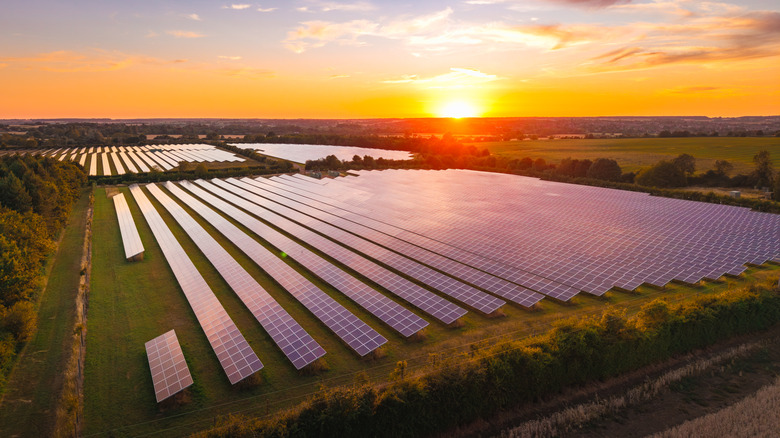
While previous projects didn't pan out, there's nothing stopping future iterations from succeeding where they didn't. For example, scientists have created self-healing solar panels intended for satellites, which could open the door to revisit the solar roadway concept for low-traffic surfaces such as parking lots, bicycle paths, and pedestrian walkways. Self-healing panels would be beneficial in these applications, but they could prove to be vital for this technology to succeed along roadways intended for passenger and commercial vehicles. Scientists have even found a way to retool solar panels so they generate electricity in the dark. It doesn't seem like a stretch that we could one day have more durable, multi-functional, and self-healing solar panels in places we didn't have before.
For now, the technology has not advanced enough and the costs are too high to use in place of traditional road and pathway materials. That doesn't necessarily mean we won't find a solution someday, or that solar panels won't advance enough to become more viable options.