

7 Companies That Are Owned By Elon Musk
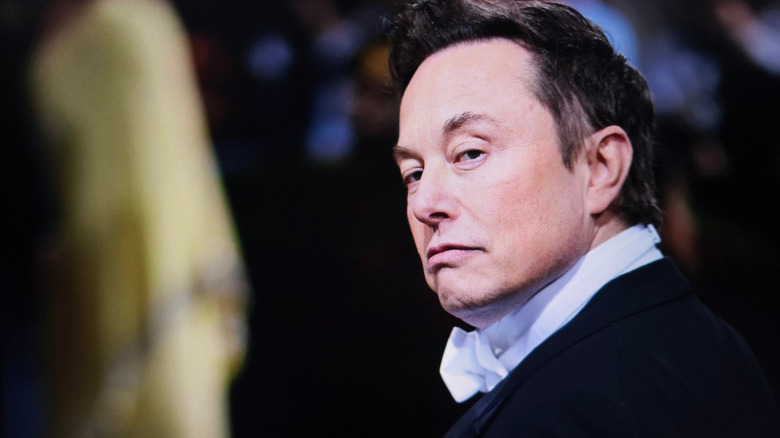
Elon Musk is the richest person in the world. At least, he was when we wrote this, but by the time you read it, that might have changed. After all, the wealth rankings are like the world's most expensive game of musical chairs. As arguably the top titan of modern commerce, Musk has owned his fair (or is that unfair?) share of companies over the years.
His first company, Zip2, provided city guide software used by newspapers. Musk sold the company to Compaq for a cool $300 million, and that's in '90s dollars! It then became part of the AltaVista search engine. Remember that? Musk went on to join PayPal by merging his X.com company (no relation to Twitter) with the (now) gigantic payment processor. Musk also co-founded OpenAI (the nonprofit behind ChatGPT) and SolarCity, which was acquired by Tesla.
Musk still has his fingers in plenty of pies, though. In fact, the South African-born magnate currently owns at least seven companies from surprisingly diverse industries.
Tesla made Elon a household name
Tesla is arguably the most famous company owned by Elon Musk, given that it made electric cars cool by targeting style, luxury, and performance over marketing that focused on environmental concerns. That approach worked, and the Tesla badge is a fairly common sight on roads in the United States. At least, in places where the Tesla Supercharger network reaches.
Musk's official Tesla page lists him as the co-founder and CEO of Tesla, but the truth is more complicated than that. The company was actually originally founded by Martin Eberhard and Marc Tarpenning. Musk led principle funding and became chairman of the board, but following some ugly corporate politics and a 2009 court case, Musk and two others are now allowed to call themselves "co-founders."
Nonetheless, today Musk is the face of the company and a key part of its success. With that said, the CEO's decision to become embroiled with world politics has done serious harm to the company's stock prices and to the perception of the brand as a whole. In a world where there are now many EV brands following in Tesla's footsteps, the company's future is uncertain, but its role in revolutionizing the electric car will always give it a place in history. The company has tried to pivot to robotics, but the Tesla Optimus robot has been a rather public failure so far.
SpaceX aims for the stars
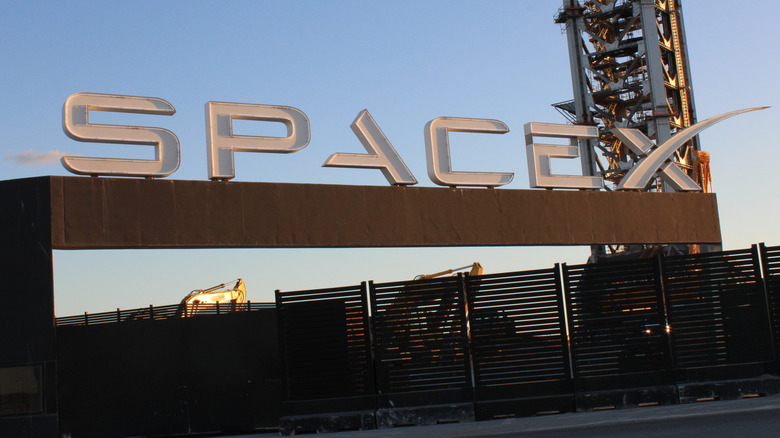
What Tesla did for electric cars, SpaceX has done for the space industry. Following his involuntary departure as PayPal's CEO, Musk cashed out and started SpaceX. By hiring people who were literal rocket scientists (and good ones), the business has gone from a plucky experimental startup to quite possibly the most advanced space company in the world. Thanks to advanced rockets that can be reused (and land themselves in spectacular fashion), SpaceX makes putting stuff in orbit orders of magnitude less expensive. It has big plans for getting humans to the moon and expanding humanity's presence in the solar system, and perhaps beyond.
SpaceX is already delivering on government contracts and can put satellites into orbit for less than the competition. The company itself has taken advantage of this through its wholly owned subsidiary Starlink, a space-based internet and telephony business that's already having a profound effect on internet connectivity around the world. Through Starlink, SpaceX seems set to connect the globe in a way that's never been feasible before. Something which everyone seems to like, except for the astronomers who find that the thousands of Starlink satellites in orbit might interfere with radio astronomy.
X is now the name of the ex-Twitter
It's one of the most infamous aggressive takeovers of a company in history, but when Elon Musk decided he wanted Twitter, it seemed there was no stopping him. By offering truckloads of money to shareholders, the billionaire got to buy his own social media company, for better or worse. One of the first changes was the company name. It went from "Twitter" to simply "X." That might sound familiar if you've been paying attention, because "X" was also the name of Elon's company that was merged into PayPal. It's probably totally unrelated, but Elon also has a son with the nickname "X" (short for "X Æ A-12," not "Xavier" or "Xobert," as you might expect).
The radical changes continued. The verified user badge system became a paid service, features like the ability to edit posts were put behind a paywall, and he reduced or altered policies that protected users against interactions that could be seen as harassment or abuse. Additionally, Musk downsized the number of content moderators who helped enforce those policies.
Musk's takeover of Twitter has been widely unpopular, and alternatives like Bluesky rapidly grew even while still requiring an invite, though it seems the exodus has slowed down. Advertisers also started leaving in droves, which is why you'll see some rather strange ads on the site today. The long-term fortunes of the company are hard to predict, but the ride will surely be interesting.
The Boring Company is anything but boring
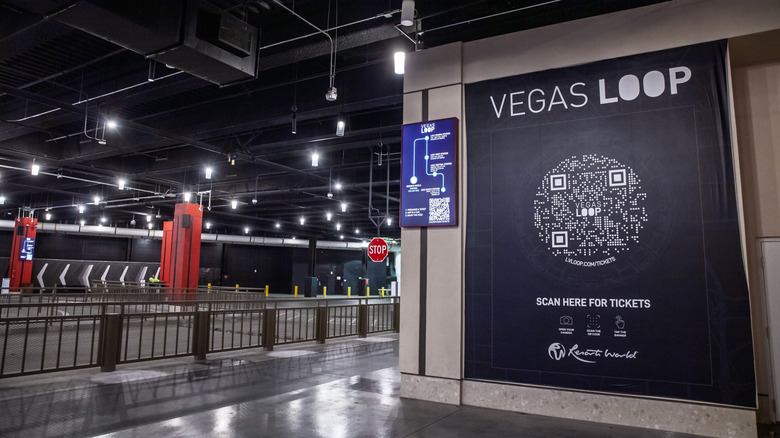
Not content to tackle transport above ground and in space, Elon Musk founded The Boring Company in 2017, which is a pretty good pun and a name that's also filled with irony. While it's literally a company that bores tunnels, the real purpose is to develop a new generation of transportation, and that's always interesting. This is mainly exemplified in the Vegas Loop, which is a demo version of the company's tunneling technology. It uses Tesla Model 3 and Model Y cars to rapidly transport passengers. Of course, you might be thinking this is just a subway with extra steps, but the jury is still out at this stage.
But cheap methods of boring tunnels are just the start. The interesting part of The Boring Company's whole deal is the Hyperloop. This is a concept that's still almost purely science fiction, although there have been several engineering competitions with an eye on moving from concept to practical technology. The idea here is to create tubes that have a near vacuum inside them and then run magnetically levitated pods through them to achieve the same sorts of incredible velocities that are possible in the vacuum of space. Unfortunately, development on this concept has stalled, since so far, the idea doesn't seem economically viable. The Hyperloop One test loop was shuttered in 2023, and the jury is still out on whether Elon will use his boring technology for building a fallout shelter.
Neuralink is trying to get inside your head
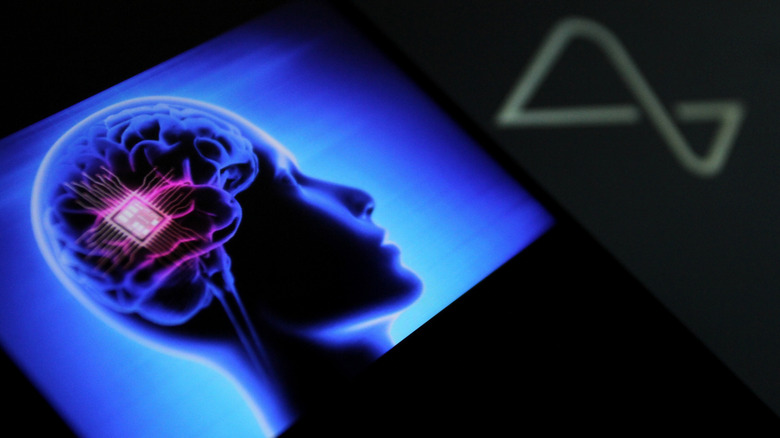
Elon Musk's drive to make science fiction a reality seems to have no end. On top of making robots, self-driving cars, and spaceships, he also wants to turn humanity into cyborgs. Founded in 2016, Neuralink is a neurotech company working on advanced brain-computer interfaces. The company's early work has aimed at helping people with paralysis or other debilitating conditions restore some of their autonomy. The Neuralink implant, in particular, allows the recipient to directly control robotic arms and computer systems.
The key innovation the company has produced is the delicate filament system that allows electrodes to be placed deep into the brain of a patient. It's minimally invasive and intended to cause no biological complications or long-term problems. Of course, we'll only know how well this goal has been achieved after getting data from the ongoing clinical trials. What's not in doubt is that the technology does work to let patients control machines with nothing but a thought. As time goes by and the software interpreting the signals improves, that level of control should only get better. The long-term vision of Neuralink is to augment humans who don't have any diseases or injuries, but some are concerned and think that Musk's plans to merge humans and AI could have huge risks.
xAI is the child of ethical differences
There's probably not a person on planet Earth unaware of OpenAI and its most famous product, ChatGPT, but you might not have known that Elon Musk is one of the cofounders of the company.
Musk left OpenAI for various reasons, including a potential conflict with Tesla's AI research related to self-driving cars and robots. However, he's also been cited as saying that he disagreed with OpenAI's direction and its abandonment of its founding mission to be an open and benevolent AI research company, instead of the closed-source, profit-driven entity it is today.
Whatever the truth of the split with OpenAI may be, we now have xAI and its ChatGPT competitor in the form of Grok. The word "grok" has a long history in the world of computers, but it's also a shot across the bow for any sci-fi nerds, who realize what this fictional Martian term implies about xAI's intentions. Despite seemingly being founded in a hurry, Grok is a highly capable AI chatbot, though a more gung-ho attitude toward its development has led to some embarrassing incidents. One infamous example is when the bot went so off the rails that it started calling itself "MechaHitler". In spite of this, Grok is right up there with the best of its competitors in AI benchmarks, so the company seems to be doing something right.
The Musk Foundation is a little enigmatic
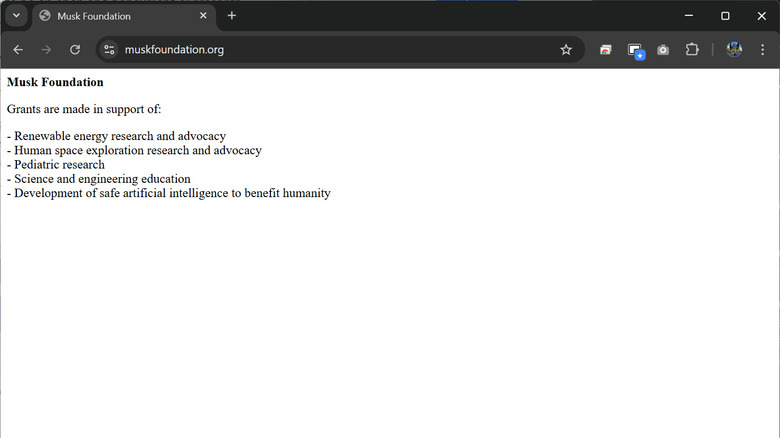
The Musk Foundation was founded in 2001 by Elon Musk and his brother Kimbal. It's a registered nonprofit organization that has received billions of dollars from Elon, largely in the form of Tesla shares. Although the organization is worth hundreds of millions, that website you see above with its simple plain text page is the only public face it has. There is no contact information, no staff, and very little in the news about what the foundation does.
There have been several investigations into the Musk Foundation over the years, showing that the nonprofit has reduced Musk's tax bill by billions. As for the foundation's actual donations, they have largely gone to past and present organizations Musk and his family are involved with. So it seems that the foundation is a legal way for Elon Musk to divert tax money to causes and projects that he cares about personally, although in recent years the flow of money through this family-run project has been under increasing scrutiny. That said, there have been some public charitable donations from the foundation, like in 2018, when Elon Musk gave students In Flint, Michigan $423,600 to buy Chromebooks.