

4 Cheaper Alternatives To The MacBook Pro Actually Worth Buying
We may receive a commission on purchases made from links.
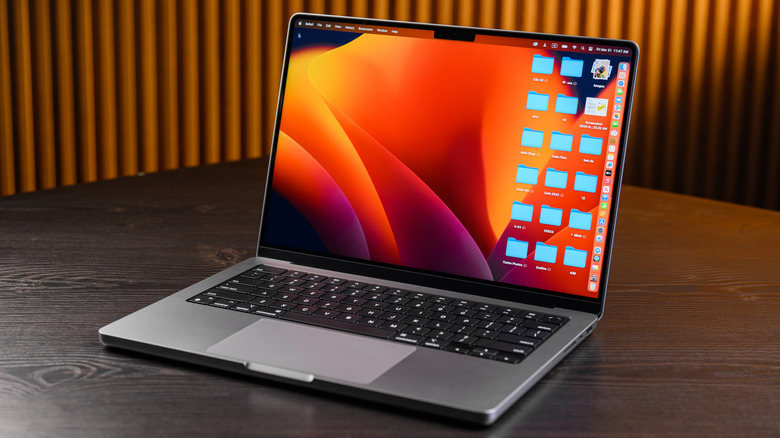
The MacBook Pro is Apple's flagship laptop, available in 14-inch and 16-inch models with plenty of configurations to choose from. These machines are intended for work such as video editing, motion graphics design and animation, music production, and software development, but the MacBook Pro is worth considering for professionals in any job that needs a laptop. Because Apple has the working professional in mind with the MacBook Pro, it's a relatively expensive laptop. The base 14-inch model, which utilizes Apple's new M5 chip, starts at $1,599. The base 16-inch model comes with an M4 Pro chip and starts at $2,499.
Finding a capable alternative to the MacBook Pro requires some discernment, as the market is flooded with laptop options at budget price points. An objectively cheap laptop isn't likely to meet the premium expectations of a MacBook Pro shopper. Meanwhile, even mid-range laptops aren't likely to be configured with hardware that can match a MacBook Pro's. But capable alternatives do exist. Brands like Dell, Samsung, Microsoft, Lenovo, Asus, and even Apple itself make powerful, slim, and well-designed laptops that can compete with the MacBook Pro. Several of these even come in at a cheaper starting price, so let's explore some that are worth buying.
MacBook Air
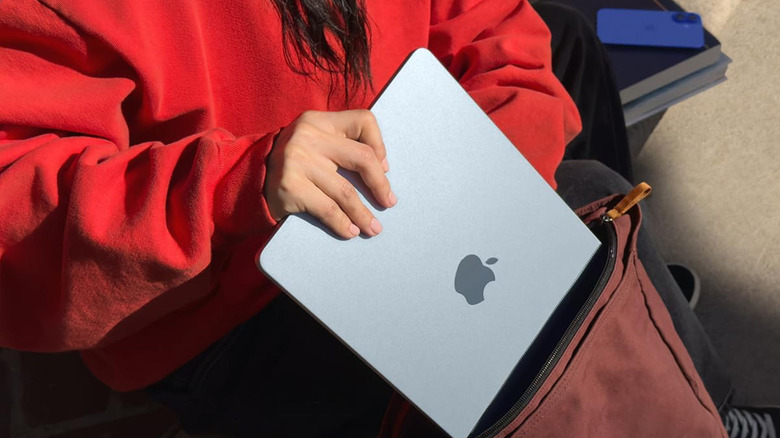
One of the 5 best Apple products of 2025, the MacBook Air is the laptop of choice if you're looking for a MacBook Pro alternative that keeps you in the Apple ecosystem. It delivers the same macOS experience, similar build quality, and access to free software like Safari, Pages, Numbers, Calendar, Contacts, and Mail. In fact, for many laptop users, we feel the MacBook Air is the only Apple laptop you should buy.
The Air is compact yet powerful, and Apple leans into portability by giving it 18 hours of battery life between charges. Apple Intelligence is built in, just as it is in the MacBook Pro. The MacBook Air is available in 13-inch and 15-inch models, and four different colors are available to choose from. While the base 14-inch MacBook Pro starts at $1,599, the base 13-inch MacBook Air typically goes for $999, but it can often be found at a discount.
One big difference between the MacBook Air and the base 14-inch MacBook Pro is the processor. The MacBook Pro features the new M5 chip, which Apple has not made available in the MacBook Air lineup. The Air also lacks the Pro's active cooling system. This contributes to its slimness, but can also limit the Air's M4 processor during heavier workloads.
ASUS Vivobook S 15
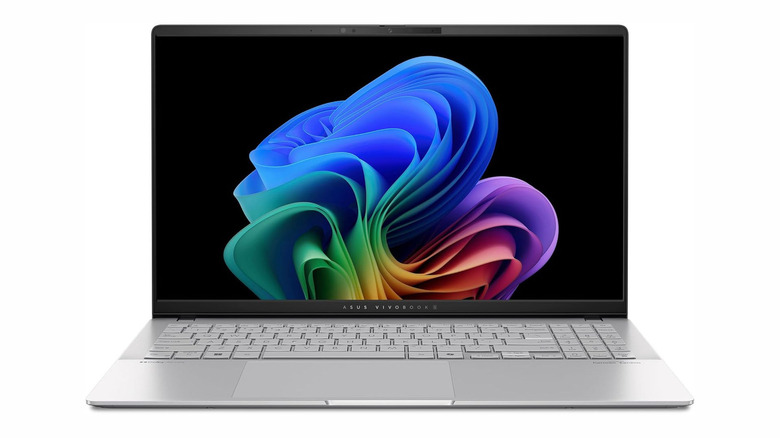
Among the Windows-based alternatives is the ASUS Vivobook S 15. Like the MacBook Pro, it's sleek but powerful. The base model Vivobook S 15 features a Snapdragon X Plus processor and 512GB of internal SSD storage, and it's priced at $1,100. A $200 upgrade gets you a Snapdragon X Elite processor and a full 1TB of storage. Both of these configurations are significantly cheaper than the base MacBook Pro's $1,599 starting price tag.
The Vivobook S 15 is able to match the aforementioned MacBook Air when it comes to portability, as it's able to reach more than 18 hours of battery life between charges. Its display also presents some competition, as it's an OLED with 3K resolution and a peak brightness of 600 nits. Built-in AI capabilities are one of the Vivobook S 15's biggest selling points. It's the first ASUS Copilot+ PC, in fact, and it utilizes a dedicated AI chip to provide assistance across a number of applications.
Creative professionals, however, may not find the Vivobook S 15 to be an ideal workhorse. This laptop has only a microSD card slot where the MacBook Pro has an SD card slot, and this can be a dealbreaker for those who utilize SD cards in video or photography workflows. The Vivobook S 15 otherwise offers great value with its significantly lower starting price than the MacBook Pro.
Dell Pro
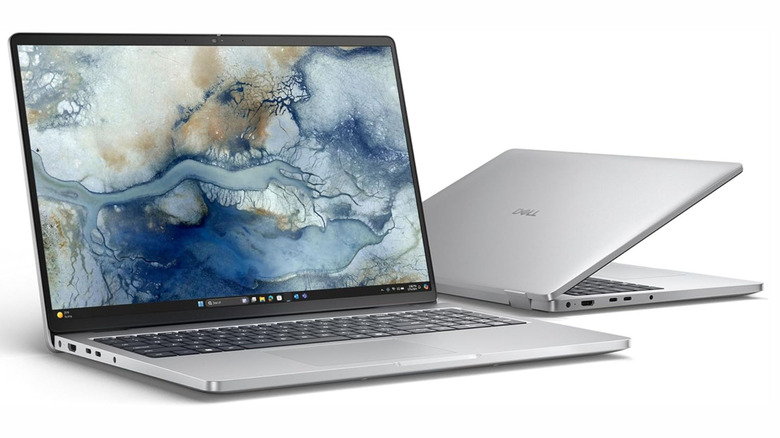
The Dell XPS laptop was long a great MacBook Pro alternative, but Dell has replaced the XPS with a rebranded lineup of laptops. The Dell Pro now competes with the MacBook Pro, and it's available in both 14-inch models and 16-inch models. The 14-inch model starts at just over $1,000 and the 16-inch model starts at just over $1,100. Comparatively, the 14-inch MacBook Pro starts at $1,599, and the 16-inch at $2,499.
Several Dell Pro configurations, however, aren't going to deliver the same level of performance as a MacBook Pro. Where Apple uses its own chips across its laptop lineups, the Dell Pro features Intel Core Ultra processors. Base models come with a Core Ultra 5. Fortunately, Dell offers a number of processor upgrades to choose from, with the most expensive being a Core Ultra 7 vPro at $296. That configuration keeps the Dell Pro cheaper than a MacBook Pro while simultaneously narrowing the performance gap.
Sticking with the base model, however, could be a great value play. The entry-level Dell Pro 14 comes with 16GB of RAM alongside the Intel Core Ultra 5 processor, and its SSD has a capacity of 256GB. Similarly to the MacBook Air, a configuration like this may be plenty for shoppers considering a MacBook Pro, and with its dark gray finish, the Dell Pro even looks similar to the MacBook Pro.
Microsoft Surface Laptop 15
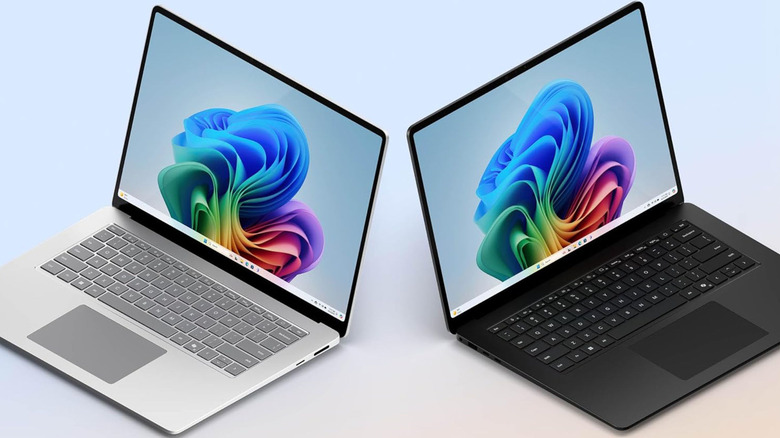
In the same way that the MacBook Pro is Apple's premium laptop offering, the Surface Laptop is Microsoft's premium laptop offering. It's available in 13-inch, 13.8-inch, and 15-inch models, with the base 15-inch Surface Laptop starting at $1,300. However, significant discounts on upgraded hardware are available from Microsoft at any given time, which make a Surface Laptop 15 with some impressive specs available for even less than that.
Even the base model Surface Laptop 15 comes with a 12-core Snapdragon X Elite processor and 16GB of RAM. These are similar specs to those you'll find in the base model MacBook Pro. The Surface Laptop is also a Copilot+ PC, which means it features a dedicated Neural Processing Unit for advanced and efficient AI processing. Copilot+ PCs are the fastest and most intelligent Windows PCs ever built, yet Microsoft has managed to keep the Surface Laptop 15 sleek and light even with its 15-inch display.
One standout feature of the MacBook Pro is its Liquid Retina XDR display, and it's a feature the Surface Laptop 15 struggles to match. Where the Liquid Retina display can reach 1,000 nits of brightness, the Surface Laptop's display can reach only 600. This isn't likely to mean much for most users, but anyone who does their work outdoors or under bright office lights might find themselves searching for shade to get the job done.
How we selected these products

When comparing laptops to a product like the MacBook Pro, performance and build quality are at the top of the list. We prioritized laptops that can genuinely compete with the MacBook Pro in at least one way or another, but performance and the premium quality of the lineup are what many MacBook Pro shoppers want. There are a lot of cheap laptops on the market, but their capabilities are limited by their pricing. Our selections have greater ambitions than just affordability.
Ultimately, pricing did matter here. The MacBook Pro is an expensive laptop, and while it was important that we track down alternatives that can hold their own next to one, it was equally important that they provide some savings. Just about any laptop can be configured with expensive hardware these days, so we focused on models that remained more affordable than various MacBook Pro models even if users want to upgrade some specs before checkout.