

Is It Safe To Charge Your AirPods Overnight?
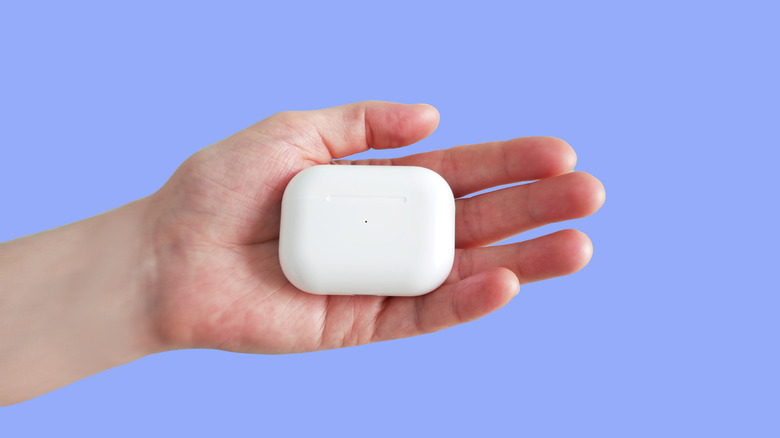
You get up in the morning, ready to begin your day with some music or your favorite podcast, only to discover that your AirPods are low on battery. It happens. You might have forgotten to put them back in the charging case when going to sleep, or the case might have run out of battery overnight. To prevent this, you might charge your AirPods overnight so they're ready to go in the morning. But is it safe to do so? The simple answer is yes; charging your AirPods overnight will not damage them. But it will have an impact on the longevity of their battery.
AirPods will not overcharge since Apple designed their batteries to stop charging when they reach 100%. The case acts as a buffer, detecting when the battery percentage drops and feeding the AirPods enough charge to keep them topped up. This prevents trickle charging, which significantly contributes to lithium-ion (Li-ion) battery degradation due to stress from the continuous current.
Even so, your AirPods batteries are still constantly being kept at 100%, which leads to voltage stress that generates excess heat. While it won't overheat or damage your AirPods, it can accelerate the battery's aging process, though at a much slower rate than trickle charging. Your AirPods might not last as long as you think, so if you want them to last as long as possible, you will need to learn smart charging habits. For example, leaving them out of their charging case might be worse than leaving them in.
Leaving AirPods out of their case is not recommended

Li-ion batteries last longer when you follow the 20/80 rule. This is where you keep the charge level between 20% and 80% to avoid both low and high voltage stress. You can take your AirPods out of the case when they reach 80%, use them, and then put them back in before they fall below 20%. However, human error is not just a factor — it's inevitable. You might forget to put them back in their case, which will cause them to continue discharging as they remain in low-power mode instead of shutting down. The low-power mode maintains the Bluetooth connection with your device, ensuring your AirPods are ready to resume play when needed.
This means your AirPods run the risk of constantly falling below 20% when they're outside of the charging case. As the charge level in a Li-ion battery approaches zero, its voltage drops. This puts more stress on the battery during a charge, since it will take longer to reach the normal charging voltage, increasing chemical degradation as it struggles. If you leave your AirPods out of their case for an extended period of time, their batteries will undergo a deep discharge. This could cause irreversible chemical changes, degrading the battery further.
For AirPods, following the 20/80 rule might be difficult since they're always charging while in the case. It's also not a sustainable long-term strategy to trust your brain. Furthermore, you run the risk of losing or stepping on them. It's safer to leave your AirPods in the case, and let the case handle charging itself.
Extending the battery health of your AirPods

You can enable a feature that delays your AirPods from charging past 80% until you're ready to use them. It's called Optimized Battery Charging, and your AirPods will learn from your daily usage patterns. That means you can leave them plugged in overnight without worrying that they will be constantly powered to stay at 100%. To turn it on, do the following:
-
Connect your AirPods to your iPhone or iPad.
-
Open the Settings app.
-
Tap on the name of your AirPods.
-
Scroll down and tap Battery.
-
Toggle on Optimized Battery Charging.
Other useful tips include turning off battery-draining features like active noise cancellation (ANC) when you're not in a noisy environment, and limiting other hidden AirPods features. Doing this can extend the battery life of your AirPods by 10 hours or more on a single charge. If you're not going to use your AirPods for a while, ensure they have enough charge so they don't drain to the point of a deep discharge. Keep them at a charge level of 50% or more when storing them for an extended period.